A Step-by-Step Guide to Getting Your HVAC Business Listed on Apple Maps
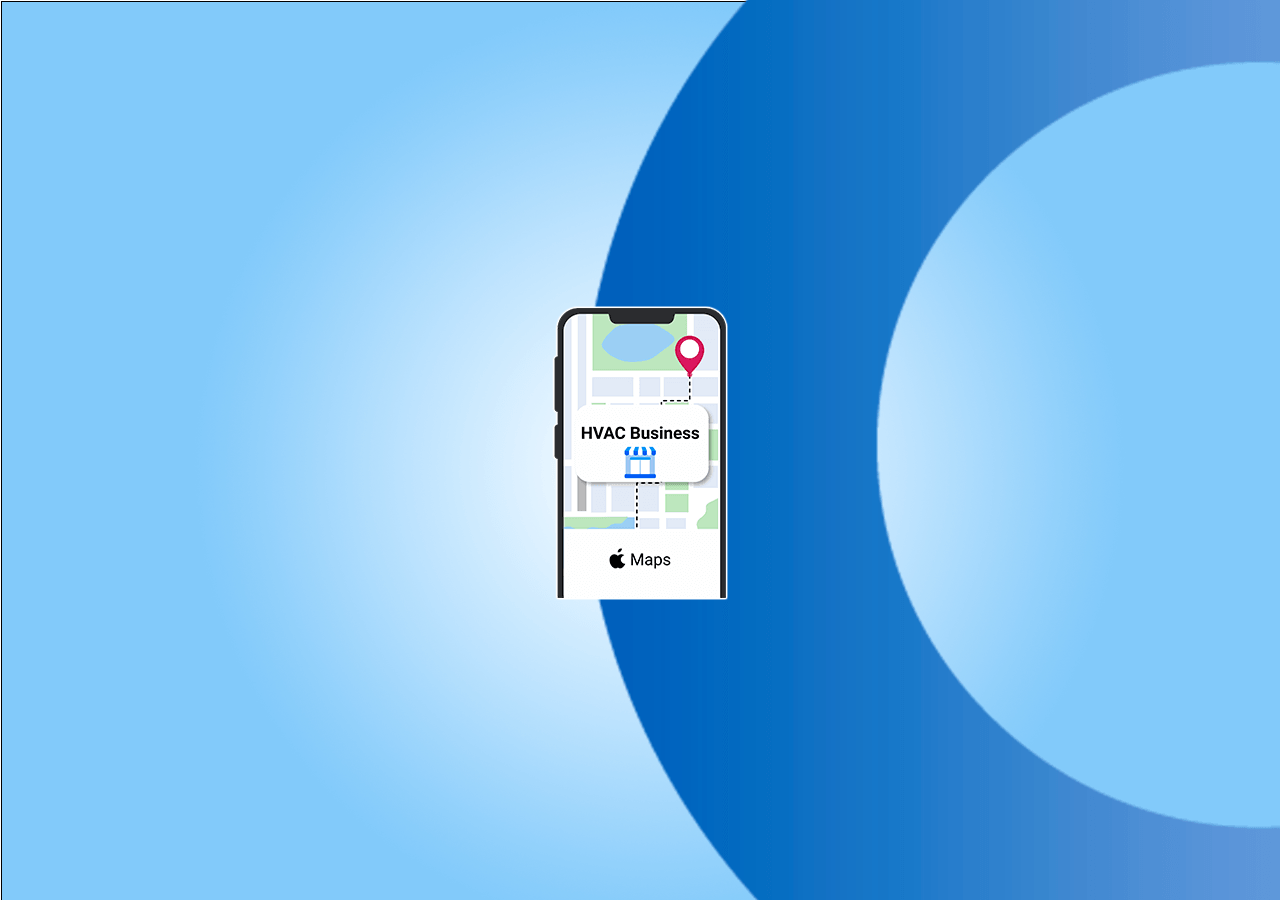
Have you ever wondered how potential customers find HVAC companies when they need emergency repairs, maintenance, or a new system installation? More often than ever, homeowners are pulling out their iPhones, asking Siri for recommendations, or searching directly through Apple Maps to find trusted local businesses.
If your HVAC company is not listed on Apple Maps, you could be missing valuable opportunities to connect with local customers who are actively searching for your services. While many contractors focus heavily on Google Business Profile, Apple Maps is another important platform that can help improve your local visibility, strengthen your online presence, and drive more leads.
The good news is that getting your HVAC business listed on Apple Maps is a relatively straightforward process. In this guide, we'll walk through why Apple Maps matters, how to claim and optimize your listing, and what steps you can take to maximize your visibility.
Why Apple Maps Matters for HVAC Businesses
Apple Maps has grown significantly over the past several years. According to Apple, there are hundreds of millions of Apple devices actively being used worldwide. Every day, users rely on Apple Maps for directions, local business searches, and location-based recommendations.
For HVAC contractors, this creates an opportunity to reach homeowners when they need help the most.
When someone searches for:
- HVAC company near me
- AC repair near me
- Furnace installation near me
- Emergency heating repair
- Air conditioning service nearby
Apple Maps may display local businesses that match the search query and location.
Smartphones remain the primary device consumers use to search for local businesses and services. Meanwhile, consumers heavily rely on online business listings and reviews when choosing service providers.
For HVAC companies, appearing in local map results can improve:
- Local visibility
- Brand awareness
- Website traffic
- Phone calls
- Direction requests
- Lead generation
- Customer trust
Understanding How Apple Maps Business Listings Work
Before claiming your listing, it's important to understand how Apple Maps gathers business information.
Apple uses data from several sources, including:
- Business owners
- Third-party data providers
- Public business information
- Customer suggestions and edits
Because information can come from multiple sources, some HVAC businesses may already have a listing on Apple Maps without realizing it. However, unclaimed listings often contain incomplete or outdated information.
Claiming your Apple Maps listing gives you more control over your business details and helps ensure potential customers see accurate information.
Step 1: Check Whether Your HVAC Business Already Exists on Apple Maps
The first step is to determine whether your company already has a listing.
Open Apple Maps and search for:
- Your business name
- Your address
- Your phone number
If your business appears, you may be able to claim and verify ownership.
If it does not appear, you'll need to create a new listing.
Take note of any inaccuracies you find, such as:
- Incorrect phone numbers
- Old addresses
- Outdated business hours
- Missing website information
- Incorrect service categories
These issues can confuse customers and reduce trust.
Step 2: Create or Claim Your Apple Business Profile
Apple Business is the platform business owners use to manage their Apple Maps presence. Think of it as Apple's equivalent to a business profile management system.
Once you create an Apple account, you'll be able to:
- Claim your listing
- Update business information
- Add photos
- Monitor listing details
- Improve customer experience
When setting up your profile, be prepared to provide:
- Business name
- Business address
- Phone number
- Website URL
- Business category
- Operating hours
For HVAC contractors, selecting the most accurate business category is important because it helps Apple understand what services you provide.
Step 3: Complete the Verification Process
Verification helps Apple confirm that you are the legitimate owner of the business.
The process may vary depending on your company and location, but verification often involves confirming business ownership through business documentation.
Be prepared to upload any of the following documents:
- Utility bill
- Business license
- Proof of insurance
Make sure all submitted information matches your official business records. Consistency across online platforms is extremely important.
Your:
- Business name
- Address
- Phone number
should match the information shown on your website, Google Business Profile, social media profiles, and local directories. This consistency is often referred to as NAP consistency, which stands for Name, Address, and Phone Number.
Maintaining consistent information across the web can support local SEO efforts and help search engines trust your business information.
Step 4: Optimize Your Business Information
Getting listed is only the beginning. To maximize results, you need a complete and optimized profile.
Add Accurate Contact Information
Many homeowners searching for HVAC services need immediate assistance.
Ensure customers can easily contact you by providing:
- Primary phone number
- Website URL
- Physical address
- Service area information
Double-check all information regularly to prevent outdated details from causing missed opportunities.
Set Accurate Business Hours
Nothing frustrates potential customers more than arriving at a business or calling during posted hours only to discover the information is incorrect.
Update:
- Regular business hours
- Holiday schedules
- Seasonal changes
Accurate hours improve customer experience and reduce confusion.
Choose Relevant Categories
Categories help Apple understand your business and match you with relevant searches.
Examples may include:
- HVAC Contractor
- Air Conditioning Contractor
- Heating Contractor
Selecting the most relevant category can improve visibility for local service-related searches.
Step 5: Add High-Quality Photos
Visual content plays an important role in building trust.
According to research from BrightLocal, consumers are more likely to engage with businesses that provide photos and complete profile information.
Consider adding:
- Company logo
- Team photos
- Service vehicles
- Office location
- Completed HVAC installations
- Branded equipment photos
Photos help homeowners feel more comfortable before contacting your company.
They also make your listing appear more professional and established.
Step 6: Include Helpful Business Details
Apple Maps users want quick answers.
Provide information that helps customers understand your company and services.
Include details such as:
- Residential HVAC services
- Commercial HVAC services
- Air conditioning repair
- Heating repair
- Furnace installation
- Heat pump services
- Preventive maintenance plans
- Indoor air quality solutions
The more complete your profile is, the easier it becomes for potential customers to determine whether you're the right fit.
Step 7: Encourage Customer Reviews Across Your Online Presence
While Apple Maps doesn’t have its own review system like Google, your overall online reputation still influences customer decisions. Apple automatically pulls reviews from your Yelp business page, which also emphasizes the importance of ensuring consistent NAP information and asking customers for reviews on multiple platforms.
Encourage satisfied customers to leave reviews on platforms such as:
- Yelp
- Industry-specific review websites
Strong reviews across multiple platforms can increase credibility and improve conversion rates when customers research your company.
Step 8: Monitor and Update Your Listing Regularly
Your Apple Maps profile should never be considered a one-time task.
Businesses change over time.
You may:
- Expand service areas
- Add new services
- Change phone numbers
- Adjust operating hours
- Rebrand your company
Regular updates ensure customers always see the most accurate information. Schedule periodic reviews of your listing every few months to identify potential issues.
Common Mistakes HVAC Contractors Should Avoid
Many HVAC companies create listings but fail to optimize them properly.
Here are some common mistakes to avoid.
Incomplete Business Profiles
Missing information can reduce visibility and discourage customers from contacting you.
Complete every available field whenever possible.
Inconsistent Contact Information
If your website lists one phone number while Apple Maps displays another, customers may lose confidence in your business.
Keep information consistent across all platforms.
Ignoring Photos
Listings without photos often appear less trustworthy than listings with professional visual content.
Failing to Update Business Hours
Incorrect hours can create negative customer experiences and lost opportunities.
Forgetting About Local SEO
Apple Maps works best when it is part of a broader local SEO strategy.
Your efforts should also include:
- Google Business Profile optimization
- Website SEO
- Local citations
- Customer reviews
- Service area pages
- Location-based content
How Apple Maps Supports Your Local SEO Strategy
Many HVAC contractors ask whether Apple Maps affects SEO.
While Apple Maps itself is not a direct Google ranking factor, it contributes to your overall local search presence.
A well-maintained Apple Maps listing can help:
- Increase online visibility
- Strengthen brand recognition
- Improve local trust signals
- Generate additional traffic sources
- Support a consistent business footprint across the internet
Think of Apple Maps as one piece of a larger digital marketing strategy.
When combined with strong SEO, a professional website, positive reviews, and accurate local citations, it can help your HVAC company stand out in competitive markets.
Additional Tips for Growing Your HVAC Business Online
Apple Maps is valuable, but it should not be your only digital marketing focus.
The most successful HVAC companies typically invest in multiple marketing channels, including:
Search Engine Optimization (SEO)
SEO helps your website rank higher when homeowners search for HVAC services in your area.
A strong SEO strategy includes:
- Local keyword targeting
- Service pages
- Technical SEO
- Content creation
- Link building
Pay-Per-Click Advertising (PPC)
PPC can place your company at the top of search results almost immediately.
This is particularly useful during peak heating and cooling seasons when competition increases.
Website Optimization
Your website should be:
- Fast
- Mobile-friendly
- Easy to navigate
- Conversion-focused
A professional website helps turn visitors into customers.
Social Media Marketing
Platforms like Facebook and Instagram can help HVAC companies stay connected with local homeowners and build long-term brand awareness.
Call Optic Marketing Group To Get Your Business Listed on Apple Maps Today
Getting your HVAC business listed on Apple Maps is a smart and relatively simple way to improve your local online visibility. As more homeowners use Apple devices to search for nearby services, maintaining an accurate and optimized Apple Maps listing can help your company attract more leads, build trust, and stay competitive in your market.
However, Apple Maps is only one piece of a successful digital marketing strategy. To achieve long-term growth, HVAC companies need a comprehensive approach that includes SEO, web design, PPC advertising, local listings management, content marketing, and reputation management.
At Optic Marketing Group, we help HVAC contractors, plumbers, and other home service businesses create customized marketing strategies that generate real results. Our team takes the time to understand your goals, identify growth opportunities, and develop cross-channel marketing campaigns that help your business stand out. Whether you need help optimizing local listings, improving your search rankings, redesigning your website, or increasing lead generation, we're here to help. All we ask is you to trust us 1%...we will earn the other 99%.

Got a 1-Star Review on Google For Your HVAC Business? Here's What To Do Next
Have you ever opened your Google Business Profile, seen a new review notification, and felt your stomach drop when you spotted a single star?
If you're an HVAC contractor, plumber, electrician, or any other home service business owner, you're not alone. Receiving a 1-star review can feel frustrating, unfair, and even personal. After all, you've worked hard to build your reputation, serve your customers, and grow your business.
The good news is that a negative review does not have to damage your company permanently. In fact, how you respond to a bad review can sometimes leave a stronger impression than a five-star review ever could.
Consumers expect businesses to receive occasional criticism. According to a study by BrightLocal, most consumers read online reviews before choosing a local business, and many specifically look at how companies respond to negative feedback. A thoughtful response can demonstrate professionalism, accountability, and a commitment to customer service.
So, if your HVAC company receives a 1-star Google review, take a deep breath. Here's exactly what to do next.
Don't Panic or Respond Emotionally
The first reaction many business owners have is anger, confusion, or disappointment.
Maybe the review contains false information. Maybe the customer never contacted your company about an issue. Or perhaps your team genuinely made a mistake that led to a poor experience.
Regardless of the situation, avoid responding immediately when emotions are high.
A defensive or argumentative response can make the situation worse. Remember that your reply is not just for the reviewer. Future customers will also read it.
Instead:
- Read the review carefully.
- Gather all relevant information.
- Talk to employees involved in the situation.
- Take a few hours, or even a day, before responding.
Maintaining a calm and professional tone protects your reputation and shows potential customers that you handle concerns responsibly.
Verify Whether the Review Is Legitimate
Before crafting a response, determine whether the review comes from an actual customer.
Unfortunately, fake reviews do happen. Some reviews may come from competitors, internet trolls, former employees, or individuals who never did business with your company.
Ask yourself:
- Can you find this person in your customer database?
- Does the review describe an actual service call?
- Do the details match a real customer interaction?
- Was there a recent dispute or misunderstanding?
If the review appears fraudulent, document everything and flag the review through Google's review management system.
Signs a Review May Be Fake
While not every suspicious review is fake, some common warning signs include:
- No details about the service experience
- Generic complaints that could apply to any business
- Reviewer has no profile history
- Reviewer cannot be identified in company records
- Multiple negative reviews appearing at the same time
Google has policies regarding fake and misleading reviews. If a review violates those policies, you can report it for removal. However, keep in mind that Google does not remove reviews simply because they are negative. The review must violate Google's guidelines.
Respond Promptly and Professionally
One of the biggest mistakes home service companies make is ignoring negative reviews.
A lack of response may signal to prospective customers that you don't care about customer concerns.
Instead, aim to respond within a few days.
What Makes a Good Review Response?
A strong response should:
- Thank the reviewer for their feedback
- Acknowledge their concerns
- Remain polite and respectful
- Avoid arguments or blame
- Offer to discuss the matter offline
- Demonstrate your commitment to customer satisfaction
Here's an example:
"Thank you for taking the time to share your feedback. We're sorry to hear that your experience did not meet your expectations. Providing quality HVAC service and customer care is important to us. We'd appreciate the opportunity to learn more about what happened and see if we can make things right. Please contact our office at your convenience."
This type of response shows professionalism without admitting fault before investigating the situation.
Never Get Into a Public Argument
It can be tempting to defend yourself when a review feels unfair.
However, public arguments rarely help your business.
Potential customers reading the exchange may focus less on who is right and more on how you handled the situation.
Avoid responses like:
- "That's not what happened."
- "You're lying."
- "You never paid your bill."
- "You were rude to our technician."
Even if these statements are true, posting them publicly can make your company appear defensive.
Instead, move the conversation offline whenever possible.
A calm response demonstrates maturity and customer-focused service, which can build trust with future customers.
Use the Review as a Learning Opportunity
Not every negative review is inaccurate.
Sometimes a 1-star review highlights a genuine issue that needs attention.
Maybe scheduling communication broke down. Maybe a technician arrived late. Maybe pricing expectations were unclear.
While criticism can be difficult to hear, it can also provide valuable insight.
Questions to Ask Internally
After receiving a negative review, consider:
- Was the customer experience consistent with company standards?
- Did communication break down at any point?
- Were expectations clearly explained?
- Is additional employee training needed?
- Could a process improvement prevent similar issues?
Businesses that learn from customer feedback often improve operations and strengthen customer loyalty over time.
Reach Out to the Customer Privately
Whenever possible, contact the customer directly.
A personal conversation can often resolve misunderstandings that are difficult to address publicly.
When reaching out:
- Listen carefully to their concerns.
- Avoid interrupting.
- Stay respectful.
- Focus on solutions.
- Look for opportunities to make things right.
Many unhappy customers simply want to feel heard.
If you can resolve the issue successfully, the customer may choose to update their review voluntarily.
What If They Don't Change the Review?
That's okay.
Your goal should be customer satisfaction, not forcing a review change.
Future customers will notice that your business made a genuine effort to address concerns, which often matters more than the review itself.
Encourage More Positive Reviews
One of the most effective ways to minimize the impact of a 1-star review is to generate more positive reviews.
A single negative review carries much less weight when surrounded by dozens or hundreds of positive experiences.
According to research from ReviewTrackers, consumers typically read multiple reviews before making a purchasing decision. They look for overall trends rather than isolated incidents.
Build a Consistent Review Strategy
Ask satisfied customers for reviews after:
- HVAC repairs
- AC installations
- Furnace replacements
- Maintenance visits
- Plumbing services
- Emergency service calls
Make the process simple by providing direct review links through email or text message.
The more authentic reviews you collect, the stronger your online reputation becomes.
Monitor Your Online Reputation Regularly
Many contractors only discover negative reviews weeks or months after they're posted.
By then, potential customers may have already seen them.
Instead, establish a system for monitoring reviews consistently.
Check platforms such as:
- Yelp
- Better Business Bureau
- Industry-specific directories
You can also use reputation management tools that alert you when new reviews are posted.
The sooner you identify a negative review, the sooner you can address it.
Understand the Bigger Picture
Many business owners worry that one bad review will destroy their reputation. In reality, consumers often expect to see some negative feedback. A profile with only perfect reviews may even appear suspicious to some shoppers. What matters most is the overall pattern.
Consider the difference:
| Scenario A | Scenario B |
| 4.9-star rating with one negative review and professional responses | 3.8-star rating with dozens of unresolved complaints |
Most consumers will choose Scenario A.
A single negative review rarely defines a business. Consistent service quality and professional communication have a much greater impact.
What Google Reviews Mean for HVAC SEO
Beyond customer trust, reviews also influence local search visibility.
Google uses several factors when ranking local businesses, including:
- Review quantity
- Review quality
- Review recency
- Overall reputation signals
Businesses with strong review profiles often have better visibility in local search results. That means review management is not just a customer service issue. It's also an important part of your local SEO strategy.
The stronger your reputation, the more likely potential customers are to find and choose your business.
Common Mistakes HVAC Companies Make After Receiving a Bad Review
Many contractors unintentionally make negative situations worse.
Avoid these common mistakes:
Ignoring the Review
Silence can appear indifferent.
Customers want to know that you care about feedback.
Responding Emotionally
Angry or defensive responses often damage credibility.
Posting Private Information
Never reveal customer details publicly.
Protect customer privacy at all times.
Buying Fake Reviews
Artificial reviews violate platform policies and can hurt your reputation.
Failing to Improve
If multiple reviews mention the same issue, it's time to investigate and make changes.
Create a Long-Term Reputation Management Plan
The best way to handle a negative review is to prepare before one appears.
A proactive reputation strategy should include:
Staff Training
Teach employees how customer interactions impact reviews.
Follow-Up Communication
Check in after completed jobs to ensure satisfaction.
Review Requests
Develop a consistent process for requesting feedback.
Review Monitoring
Track reviews regularly across all major platforms.
Professional Responses
Respond thoughtfully to both positive and negative reviews.
When reputation management becomes part of daily operations, your business is better equipped to handle occasional criticism.
Why Professional Reputation Management Can Help
Managing reviews takes time, consistency, and strategy.
For busy HVAC and plumbing business owners, it can be difficult to monitor reviews, respond appropriately, and maintain a steady flow of positive customer feedback while also running day-to-day operations.
That's where professional marketing support can make a significant difference.
An experienced marketing team can help:
- Monitor online reviews
- Develop response strategies
- Improve customer communication
- Increase positive review generation
- Strengthen local SEO performance
- Protect and enhance your online reputation
The goal is not simply to manage bad reviews. It's to build a reputation that consistently attracts new customers and supports long-term growth.
Trust Optic Marketing Group To Manage Your Online Reviews and Reputation
Getting a 1-star Google review can feel discouraging, especially when you've invested so much time and effort into serving your customers. However, one negative review does not define your HVAC business.
What truly matters is how you respond. By staying professional, investigating the situation, communicating with the customer, learning from feedback, and actively building a strong review profile, you can turn a negative experience into an opportunity to strengthen your reputation.
At Optic Marketing Group, we help HVAC contractors, plumbers, and other home service businesses build trust online through strategic digital marketing, local SEO, reputation management, website development, paid advertising, and more. We believe in honest communication, proven strategies, and helping businesses grow through meaningful customer connections.
No smoke and mirrors. Just results. All we ask is you to trust us 1%... we'll earn the other 99%. If you're ready to strengthen your online reputation and attract more qualified customers, our team is here to help.

How AI Can Streamline Internal Operations for HVAC Businesses
Running an HVAC business today is not what it was ten years ago. Between managing service calls, scheduling technicians, handling customer communication, tracking inventory, creating estimates, and staying competitive, business owners have a lot on their plates. If you feel like there are never enough hours in the day to get everything done, you're not alone.
So, how can HVAC companies work smarter without adding more staff or increasing overhead costs?
The answer is increasingly becoming artificial intelligence (AI).
AI is no longer a futuristic concept reserved for large corporations. In 2026, AI-powered tools are more accessible and affordable than ever, making them valuable resources for small and mid-sized HVAC businesses. From improving office efficiency to enhancing customer service, AI can help contractors streamline daily operations and focus more on growth.
In this guide, we'll explore how HVAC businesses can use AI to improve internal processes, reduce administrative burdens, and create a more efficient operation from top to bottom.
Understanding AI in the HVAC Industry
Before diving into specific applications, it's important to understand what AI actually means for HVAC businesses.
Artificial intelligence refers to computer systems that can analyze information, identify patterns, make predictions, and automate tasks that traditionally required human involvement. Rather than replacing employees, AI is designed to help teams work more efficiently.
For HVAC companies, AI can assist with:
- Scheduling and dispatching
- Customer service
- Data analysis
- Inventory management
- Marketing automation
- Predictive maintenance
- Administrative tasks
- Reporting and forecasting
AI technologies have the potential to automate many repetitive business functions, allowing employees to focus on higher-value activities. Similarly, businesses using AI-driven automation often see improvements in productivity and operational efficiency.
For HVAC owners, that means spending less time buried in paperwork and more time serving customers and growing the company.
AI-Powered Scheduling and Dispatching
One of the biggest operational challenges for HVAC businesses is scheduling technicians efficiently.
A poorly planned schedule can lead to:
- Missed appointments
- Increased drive times
- Higher fuel costs
- Reduced technician productivity
- Frustrated customers
AI-powered scheduling tools can analyze multiple factors simultaneously, including:
- Technician availability
- Technician skill sets
- Customer locations
- Traffic conditions
- Appointment priorities
- Historical job durations
Instead of manually assigning jobs throughout the day, AI can recommend the most efficient routes and schedules automatically.
Benefits of Intelligent Dispatching
When scheduling becomes more efficient, HVAC companies can often:
- Complete more service calls each day
- Reduce technician downtime
- Lower transportation expenses
- Improve on-time arrival rates
- Increase customer satisfaction
Even small improvements in scheduling can have a significant impact on profitability over time.
Improving Customer Service With AI
Customers expect fast responses. Whether they're dealing with a broken air conditioner in July or a malfunctioning furnace during winter, they want answers quickly.
AI tools can help HVAC businesses provide faster communication without overwhelming office staff.
AI Chatbots and Virtual Assistants
AI-powered chatbots can answer common customer questions around the clock.
Examples include:
- Service availability
- Business hours
- Financing options
- Maintenance plans
- Appointment requests
- Basic troubleshooting guidance
This doesn't mean replacing human customer service representatives. Instead, chatbots handle routine inquiries so staff members can focus on more complex customer needs.
Faster Response Times
Research from HubSpot consistently shows that consumers value quick responses from businesses. AI tools can instantly acknowledge inquiries and gather important information before a team member follows up.
This helps create a better customer experience while reducing administrative workloads.
Streamlining Administrative Tasks
Many HVAC business owners spend hours every week on administrative work that doesn't directly generate revenue.
Common examples include:
- Data entry
- Invoice creation
- Appointment confirmations
- Follow-up emails
- Document management
- Reporting
AI-powered software can automate many of these repetitive tasks.
Automated Data Entry
Manual data entry can be time-consuming and prone to errors.
Modern AI tools can:
- Extract information from forms
- Organize customer records
- Update CRM systems
- Process invoices
- Generate reports
By reducing manual entry, businesses can improve accuracy while freeing up valuable staff time.
Automated Customer Follow-Ups
Following up with customers is important, but it often gets pushed aside during busy periods.
AI can automatically send:
- Appointment reminders
- Maintenance reminders
- Service follow-up emails
- Review requests
- Membership renewal notifications
This helps maintain customer engagement without requiring constant oversight.
Using AI for Inventory Management
Inventory management is another area where HVAC businesses often struggle.
Ordering too much inventory ties up cash. Ordering too little can delay jobs and create customer frustration.
AI-powered inventory systems help strike the right balance.
Predicting Inventory Needs
AI can analyze:
- Historical purchasing data
- Seasonal trends
- Equipment demand
- Service frequency
- Supplier lead times
Based on these factors, the system can predict future inventory requirements and recommend reorder points.
Reducing Waste and Delays
Better inventory forecasting can help businesses:
- Reduce excess stock
- Minimize shortages
- Improve cash flow
- Complete jobs faster
- Enhance customer satisfaction
For companies managing large inventories of HVAC equipment and parts, these efficiencies can make a substantial difference.
Enhancing Financial Management
Financial oversight is critical for any HVAC business, but reviewing spreadsheets and reports manually can be overwhelming.
AI can help business owners gain better visibility into financial performance.
Smarter Financial Reporting
AI-powered accounting systems can:
- Track expenses
- Categorize transactions
- Monitor cash flow
- Generate financial reports
- Identify unusual spending patterns
Instead of spending hours compiling reports, owners can quickly access meaningful insights.
Better Forecasting
AI can also analyze historical financial data to help predict:
- Seasonal revenue trends
- Labor costs
- Equipment expenses
- Profit margins
- Future cash flow needs
These insights can support smarter business decisions and long-term planning.
Predictive Maintenance for Internal Operations
Most HVAC professionals are familiar with predictive maintenance for customers. However, AI can also support internal operations through predictive analytics.
Monitoring Fleet Performance
Service vehicles are essential business assets.
AI-powered fleet management systems can monitor:
- Vehicle health
- Fuel consumption
- Maintenance schedules
- Driver behavior
- Route efficiency
Predictive alerts can identify potential issues before major breakdowns occur.
Protecting Business Equipment
HVAC companies also rely on tools, warehouse equipment, and office technology.
AI monitoring systems can help track performance trends and identify maintenance needs early, reducing costly disruptions.
Improving Employee Productivity
Finding and retaining skilled HVAC technicians remains a challenge throughout the industry.
Rather than expecting employees to do more work, AI helps remove unnecessary tasks that slow them down.
Reducing Administrative Burdens
Technicians often spend valuable time:
- Completing paperwork
- Writing service notes
- Updating customer records
- Creating estimates
AI-powered mobile applications can automatically generate summaries, transcribe notes, and organize job information.
This allows technicians to spend more time performing billable work and less time handling administrative responsibilities.
Supporting Training and Knowledge Sharing
AI can also assist with employee development.
For example, AI-powered knowledge bases can help technicians quickly access:
- Repair procedures
- Equipment specifications
- Installation guidelines
- Troubleshooting recommendations
This can improve consistency and reduce time spent searching for information.
Leveraging AI for Business Analytics
Many HVAC businesses collect significant amounts of data but struggle to turn it into actionable insights.
AI excels at identifying patterns within large datasets.
Key Performance Metrics AI Can Analyze
AI can help track:
- Revenue trends
- Lead conversion rates
- Technician productivity
- Customer retention
- Maintenance agreement performance
- Marketing effectiveness
Instead of reviewing multiple spreadsheets, owners can receive easy-to-understand reports and recommendations.
Making Better Business Decisions
When business leaders have access to reliable data, they can make more informed decisions regarding:
- Hiring
- Marketing investments
- Service offerings
- Pricing strategies
- Expansion opportunities
The result is a more proactive and strategic approach to growth.
AI and Marketing Operations
While AI is often discussed in terms of customer-facing activities, it can also improve internal marketing workflows.
Content Creation Assistance
AI can help marketing teams:
- Generate blog topic ideas
- Create social media outlines
- Draft email campaigns
- Research industry trends
- Organize content calendars
Human oversight remains essential, but AI can significantly reduce the time required to create marketing materials.
Better Lead Management
AI-powered CRM systems can analyze lead behavior and prioritize prospects based on their likelihood to convert.
This allows sales teams to focus their efforts where they are most likely to generate results. Businesses that effectively use customer data and automation often improve both customer engagement and sales performance.
Common Concerns About AI Adoption
Despite its benefits, some HVAC business owners hesitate to adopt AI.
Let's address a few common concerns.
Will AI Replace Employees?
In most HVAC businesses, AI is not replacing workers.
Instead, it helps employees become more productive by eliminating repetitive tasks and providing better access to information.
The goal is to support your team, not replace it.
Is AI Too Expensive?
Many AI-powered features are already built into software platforms HVAC companies use every day.
Additionally, cloud-based solutions have made AI tools more affordable for small businesses than ever before.
The potential savings in labor, efficiency, and productivity often outweigh implementation costs.
Is AI Difficult to Learn?
Most modern AI platforms are designed for non-technical users.
Business owners and office staff typically require only minimal training to begin benefiting from AI-powered features.
Starting with one or two applications often makes the transition much easier.
Best Practices for Implementing AI in Your HVAC Business
If you're considering AI adoption, take a strategic approach.
Start With Your Biggest Pain Points
Identify repetitive tasks that consume the most time.
Examples may include:
- Scheduling
- Dispatching
- Customer communication
- Data entry
- Reporting
Choose solutions that directly address those challenges first.
Train Your Team
Employee adoption plays a major role in success.
Provide training and explain how AI tools will help employees work more efficiently rather than create additional complexity.
Monitor Performance
Track key metrics before and after implementation.
Look for improvements in:
- Productivity
- Customer satisfaction
- Revenue
- Response times
- Operational efficiency
Measuring results helps ensure you're maximizing your investment.
The Future of AI for HVAC Companies
AI technology continues to evolve rapidly, and its role in the HVAC industry will likely expand over the coming years.
Future advancements may include:
- More advanced predictive maintenance
- Enhanced dispatch optimization
- Improved customer personalization
- Smarter inventory forecasting
- Greater integration across business systems
Companies that embrace these innovations early may gain a competitive advantage through improved efficiency, stronger customer experiences, and more scalable operations.
The good news is that businesses don't need to implement every AI tool at once. Even small improvements can create meaningful results over time.
Contact Optic Marketing Group For Help Streamlining Your Business Operations
AI is transforming how HVAC businesses operate behind the scenes. From scheduling and customer service to inventory management, reporting, marketing, and employee productivity, AI offers opportunities to streamline operations and reduce the administrative burdens that often limit growth.
For HVAC and home service companies looking to stay competitive in 2026 and beyond, adopting the right AI-powered tools can help create a more efficient, scalable, and profitable business.
At Optic Marketing Group, we understand that technology is only valuable when it supports your larger business goals. As a full-service marketing agency, we help home service companies leverage modern digital strategies, automation tools, AI-powered solutions, website optimization, SEO, paid advertising, and more to drive measurable growth. We don't believe in smoke and mirrors. We believe in listening to your vision, building the right strategy, and helping your business reach its full potential.
If you're ready to explore how AI and digital marketing can work together to strengthen your HVAC business, our team is here to help. All we ask is you to trust us 1%…we will earn the other 99%.

How HVAC Companies Can Manage PPC Campaigns for More Leads
How HVAC Companies Can Manage PPC Campaigns for More Leads
Have you ever wondered why some HVAC companies seem to always have a steady flow of service calls while others struggle just to get the phone ringing? In many cases, the difference is not just skill or pricing; it is how effectively they are using PPC advertising to reach customers who are ready to buy right now.
Pay-per-click (PPC) advertising can feel overwhelming for HVAC business owners who are already juggling scheduling, technicians, and customer service. But when it is done correctly, PPC can become one of the most powerful lead generation tools in your entire marketing strategy. In fact, businesses typically make an average of $2 for every $1 spent on Google Ads, according to Google’s economic impact data.
So how do HVAC companies actually manage PPC campaigns in a way that brings in consistent, high-quality leads without wasting budget? Let’s break it down in a practical, easy-to-follow way.
Why PPC Advertising Matters for HVAC Companies
HVAC services are urgent by nature. When someone’s AC breaks in the middle of a Florida summer or their furnace stops working in January, they are not browsing, they are searching and calling fast.
That is exactly where PPC shines.
Unlike SEO, which can take months to build momentum, PPC allows HVAC companies to appear at the top of Google almost immediately. According to WordStream, paid search visitors are 50% more likely to convert than organic visitors because they are often searching with higher intent.
For HVAC contractors, this means:
- More emergency service calls
- More seasonal tune-up bookings
- More installation leads
- Faster visibility in competitive markets
But the key is not just running ads. It is running them strategically.
How PPC Campaigns Actually Work for HVAC Leads
At its core, PPC is simple: you bid on keywords, your ad shows up in search results, and you pay when someone clicks.
But for HVAC companies, the real strategy lies in targeting the right intent.
For example:
- “AC repair near me” = high intent emergency lead
- “best air conditioner brands” = research phase lead
- “furnace installation cost” = comparison stage lead
Not all clicks are equal. A successful HVAC PPC campaign focuses heavily on high-intent searches that are more likely to turn into booked jobs.
Google Ads uses an auction system that considers:
- Your bid amount
- Your ad quality
- Your landing page experience
This means you cannot simply outspend competitors. You also have to outperform them in relevance and user experience.
Common PPC Mistakes HVAC Companies Make
Many HVAC companies try PPC, spend money quickly, and then decide it “does not work.” In reality, the issue is usually setup and optimization, not the platform itself.
Here are the most common mistakes:
1. Targeting Too Broad of Keywords
Bidding on terms like “HVAC” or “air conditioning” is expensive and too vague. These searches often include people looking for information, not service.
Instead, focus on:
- “AC repair emergency near me”
- “furnace not blowing hot air repair”
- “HVAC contractor installation quote”
2. Not Using Negative Keywords
Negative keywords prevent your ads from showing for irrelevant searches. Without them, you might pay for clicks like:
- HVAC jobs
- DIY repair guides
- HVAC school programs
3. Sending Traffic to the Homepage
This is a major conversion killer. If someone searches “AC repair near me,” they should land on a dedicated AC repair page, not a general homepage.
4. Ignoring Call Tracking
If you are not tracking phone calls, you are guessing. And guessing leads to wasted budget.
Building a Strong HVAC Keyword Strategy
Keyword strategy is the backbone of any successful PPC campaign. For HVAC companies, it should be built around urgency, service type, and location.
A strong structure usually includes:
Emergency Keywords
These drive the fastest conversions:
- “24 hour HVAC repair”
- “emergency AC repair near me”
- “furnace not working repair”
Service-Based Keywords
These focus on planned services:
- “AC installation cost”
- “duct cleaning service”
- “HVAC maintenance plan”
Location-Based Keywords
Local intent is critical:
- “HVAC company in [city]”
- “air conditioning repair near me”
- “furnace repair [city name]”
Writing HVAC PPC Ads That Actually Convert
Your ad copy is your first impression. And in PPC, first impressions determine whether someone clicks you or your competitor.
Strong HVAC ads should include:
- Clear service offering
- Location relevance
- Urgency or benefit
- A strong call to action
Example:
“Fast AC Repair in Tampa – Available 24/7. Licensed HVAC Techs Ready Today. Call Now for Same-Day Service.”
What Works Best in HVAC Ad Copy
- “Same-day service”
- “Licensed and insured”
- “24/7 emergency repair”
- “Free estimates”
Avoid vague messaging like “quality HVAC services.” Customers do not click on generic promises. They click on immediate solutions.
Landing Pages: Where HVAC Leads Are Won or Lost
You can have the best ads in the world, but if your landing page is weak, your leads will drop off quickly.
A strong HVAC landing page should include:
- A clear headline that matches the ad
- Simple service explanation
- Trust signals (reviews, certifications)
- Easy-to-find contact form or phone button
- Mobile-friendly design
For HVAC companies, speed matters. If a page takes too long to load or is confusing, potential customers will leave and call a competitor instead.
Budgeting and Bidding for HVAC PPC Campaigns
One of the biggest concerns HVAC owners have is cost. PPC can be expensive if not managed properly, but it is also highly controllable.
Typical HVAC cost-per-click ranges can vary widely depending on location and competition, often between $10 and $50 per click for high-intent keywords.
Smart Budgeting Tips:
- Start with a focused budget instead of spreading too thin
- Prioritize emergency services first
- Increase budget during peak seasons
- Reduce spend on low-performing keywords
Bidding Strategies That Work:
- Maximize conversions (for lead generation)
- Target CPA (cost per acquisition)
- Manual bidding for tighter control in early stages
The goal is not just traffic. It is profitable leads.
Tracking Performance and Optimizing Campaigns
PPC is not a set-it-and-forget-it strategy. The real results come from consistent optimization.
HVAC companies should regularly monitor:
- Cost per lead
- Conversion rate
- Click-through rate (CTR)
- Call volume from ads
- Keyword performance
Using tools like Google Ads conversion tracking and call tracking software helps connect the dots between clicks and real customers.
Small adjustments can make a big difference, such as:
- Pausing underperforming keywords
- Improving ad copy based on search terms
- Adjusting bids by time of day
Over time, these refinements lead to more efficient spending and higher-quality leads.
Local PPC Strategy for HVAC Companies
HVAC services are local by nature, which makes geo-targeting one of the most important parts of PPC.
You do not want to show ads outside your service area. That wastes budget and brings irrelevant clicks.
Best Practices for Local PPC:
- Use radius targeting around your service area
- Create separate campaigns for different cities
- Include city names in ad copy
- Use location extensions in Google Ads
For example, an HVAC company serving multiple cities should not run one generic campaign. Instead, each area should have tailored messaging and keywords.
This improves both relevance and conversion rates.
Seasonal Strategy for HVAC PPC Campaigns
HVAC demand is heavily seasonal. Smart PPC management takes advantage of this.
Summer Focus:
- AC repair
- AC installation
- Emergency cooling services
Winter Focus:
- Furnace repair
- Heating installation
- Emergency heating services
During peak seasons, competition increases, which means higher CPCs. Planning ahead helps HVAC companies stay competitive without overspending.
A proactive approach includes:
- Increasing budgets before peak season hits
- Launching seasonal promotions
- Updating ad copy based on weather trends
The Role of Professional PPC Management
While HVAC owners can learn PPC basics, managing campaigns at a high level requires constant testing, optimization, and strategy adjustments.
This is where professional marketing support becomes valuable. A strong PPC strategy is not just about running ads. It is about:
- Understanding customer intent
- Reducing wasted ad spend
- Improving conversion rates
- Scaling profitable campaigns
Let Optic Marketing Group Help Turn HVAC PPC Into a Reliable Lead Engine
PPC advertising can completely change the way HVAC companies generate leads, but only when it is managed with strategy, consistency, and attention to detail. From keyword selection and ad copy to landing pages and tracking, every piece of the campaign plays a role in performance.
The companies that win with PPC are not always the biggest. They are the ones that understand how to target the right customers at the right time with the right message.
That is where Optic Marketing Group comes in.
At Optic Marketing Group, we help HVAC and home service businesses build PPC campaigns that actually generate results, not just clicks. We take the time to understand your goals, your service area, and your ideal customers so we can create campaigns that drive real, measurable growth. Our approach is simple: we listen first, then build strategies that turn your advertising into a predictable source of leads.
If you are ready to take your HVAC marketing from unpredictable to consistently profitable, our team is here to help you build a smarter PPC system that supports long-term success.
Why PPC Gets More Expensive Every Year (And What To Do About It)
Why PPC Gets More Expensive Every Year (And What To Do About It)
If you’ve been running Google Ads for your HVAC business for more than a few years, you’ve probably noticed something:
Clicks cost more.
Leads cost more.
And it takes more budget to generate the same results.
You’re not imagining it.
PPC almost always gets more expensive over time.
Here’s why—and more importantly, what you can do about it.
1. More Competition Enters the Auction Every Year
Google Ads operates on an auction system.
Every time someone searches “AC repair near me,” advertisers compete in real time for that click.
As more HVAC companies invest in digital marketing, more competitors enter the auction.
More bidders = higher bids.
Higher bids = higher cost per click.
Industry benchmark reports from firms like WordStream and LOCALiQ consistently show rising average cost-per-click across competitive service industries as more advertisers enter paid search auctions each year.
In categories like HVAC, legal, roofing, and plumbing, CPC inflation isn’t a theory.
It’s a pattern.
2. Private Equity and Large Operators Are Raising the Floor
In many markets, larger multi-location HVAC brands and private equity-backed groups are investing aggressively in paid search.
They often have:
- Larger marketing budgets
- Dedicated in-house marketing teams
- Higher tolerance for short-term acquisition costs
- Aggressive growth mandates
This pushes auction pressure upward.
Smaller operators often feel squeezed because they’re competing against companies willing to spend more per lead to grow market share.
3. Platforms Optimize for Revenue
Google’s goal is not to lower your advertising costs.
It’s to maximize the value of its advertising platform.
As automation and smart bidding become more common, auctions become more efficient—but also more competitive.
The more valuable a keyword is, the more expensive it becomes.
And HVAC emergency searches are extremely valuable.
4. Consumers Are Comparing More Options
Homeowners don’t click one ad anymore.
They click several.
They compare websites.
They read reviews.
They request multiple quotes.
Modern buyers regularly evaluate multiple providers before making service decisions, especially for high-trust purchases like home services.
That means:
- Conversion rates can decline
- Cost per acquisition rises
- More spend is required to close the same number of customers
Even if your ads are well managed, the competitive environment has changed.
5. Bottom-Funnel Saturation
The biggest driver of PPC inflation isn’t just competition.
It’s over-dependence.
When every HVAC company in a county relies heavily on Google Ads as their primary marketing channel, everyone is competing for the same small group of homeowners who are actively searching.
Marketing science research from the Ehrenberg-Bass Institute for Marketing Science shows that at any given time, most buyers in a category are not actively in-market—they will enter the market later when a need arises.
When every company focuses exclusively on the moment of search, the auction becomes crowded.
And costs rise.
So What Can You Do?
You have three options.
Option 1: Spend More
Many companies simply increase their Google Ads budget to maintain lead volume.
This works—until it doesn’t.
Eventually it creates dependency and reduces margin flexibility.
Option 2: Optimize Better
Improvements can include:
- Better landing pages
- Stronger ad copy
- Improved call handling
- Better tracking and attribution
These improvements are necessary.
But they rarely solve the macro issue of rising auction pressure.
Option 3: Reduce Reliance on PPC
This is the strategic move.
When you build awareness upstream, you:
- Increase branded search
- Improve click-through rates
- Improve conversion rates
- Shorten sales cycles
- Reduce price sensitivity
In other words, you make PPC work more efficiently.
The Hidden Metric: Branded Search
One of the clearest signals that awareness advertising is working is an increase in branded search.
When homeowners search your company name directly instead of generic terms like “AC repair near me,” you’re no longer competing in the most crowded auction pool.
Branded clicks are typically cheaper.
Branded traffic converts at significantly higher rates.
And brand familiarity reduces comparison shopping.
Brand-building campaigns often increase branded search activity and improve downstream performance marketing efficiency. Brand advertising strengthens long-term demand, which improves the efficiency of short-term activation channels like search and paid social.
In other words:
Awareness doesn’t replace PPC.
It makes PPC work better.
The Long-Term Play
PPC is not the problem.
Over-reliance on PPC is the problem.
Conversion marketing captures demand.
Awareness marketing helps create it.
When you combine both, you shift from constantly buying customers at full price to building familiarity that lowers future acquisition costs.
In competitive HVAC markets, that difference compounds.
The Smart Move for Growing HVAC Companies
If you are:
- Increasing your Google Ads budget every year
- Watching cost per lead steadily climb
- Expanding from one truck to multiple trucks
- Competing in a crowded county
It may not be a PPC problem.
It may be a funnel imbalance problem.
Build a Strategy That Reduces Dependency
At Optic Marketing Group, we help home service businesses design integrated marketing strategies that combine awareness channels like CTV, streaming audio, broadcast radio, and outdoor with strong digital performance campaigns.
The goal isn’t to replace PPC.
It’s to make it work better—and cost less over time.
If you’re ready to build a marketing engine that performs today and compounds tomorrow, let’s talk.
Trust us 1%. We’ll earn the other 99%.

10 Press Release Ideas Every HVAC Business Should Be Using For Brand Authority
10 Press Release Ideas Every HVAC Business Should Be Using For Brand Authority
Have you ever wondered why some HVAC companies in your area seem to get all the attention, while others struggle to stand out even after years of great service? The difference is often not just skill or pricing. It is visibility, credibility, and how well a business tells its story to the public.
Press releases are one of the most underused tools in the home services industry, especially for HVAC contractors. When done correctly, they can build authority, improve local SEO, and position your company as the trusted expert in your market. In fact, according to a study by Cision, 68% of journalists say press releases are the most useful type of content for discovering story ideas and business updates.
For HVAC businesses competing in crowded local markets, that kind of exposure can make a real difference.
Below are 10 practical and highly effective press release ideas every HVAC business should be using to build stronger brand authority in 2026 and beyond.
Why Press Releases Still Matter for HVAC Businesses
Many contractors assume press releases are outdated, but that is far from the truth. Today, press releases play a dual role: public relations and search engine optimization.
Search engines like Google value brand mentions, backlinks, and local relevance. When your HVAC company appears in trusted publications or local news sites, it signals authority and legitimacy. This can improve rankings for competitive keywords like “AC repair near me” or “furnace installation in [city].”
According to HubSpot, businesses that publish consistent content, including press releases, generate 67% more leads than those that do not.
For HVAC businesses, this means press releases are not just about publicity. They are about long-term growth.
10 Press Release Ideas Every HVAC Business Should Be Using
Below are actionable, real-world press release ideas you can use throughout the year to increase visibility, build trust, and attract both customers and media attention.
1. Seasonal HVAC Maintenance Campaigns
Every HVAC business experiences seasonal demand shifts. Use press releases to announce seasonal tune-up campaigns for spring and fall.
You can highlight:
- Energy savings tips for homeowners
- HVAC maintenance checklist
- Limited-time discounts or service packages
This positions your company as proactive and helpful, not just reactive when systems break down.
2. New Service Launch Announcements
Whenever you introduce a new service, it is a perfect press release opportunity.
Examples include:
- Ductless mini-split installation
- Indoor air quality testing
- Smart thermostat installation services
This type of announcement helps educate your audience while also signaling growth and innovation.
3. Emergency HVAC Response Expansion
If your company expands 24/7 emergency services or adds faster response times, announce it publicly.
Homeowners value reliability during extreme weather conditions. A press release like this builds immediate trust and positions your business as dependable during urgent situations.
4. Community Involvement and Sponsorships
Community-focused press releases are powerful for local SEO and reputation building.
You can highlight:
- Sponsoring local sports teams
- Participating in charity drives
- Donating HVAC services to families in need
5. Energy Efficiency Awareness Campaigns
Energy costs continue to rise, and homeowners are actively looking for ways to save money.
A press release focused on energy efficiency can include:
- Tips for reducing utility bills
- Benefits of high-efficiency HVAC systems
- Rebates or tax incentives
This type of content positions your HVAC company as an educator, not just a service provider.
6. Hiring and Team Expansion Announcements
Hiring skilled technicians is a major milestone worth sharing.
A press release about team expansion can:
- Highlight certifications and experience
- Show business growth and stability
- Build trust with potential customers
People want to hire companies that are growing and investing in talent.
7. Awards, Certifications, and Accreditations
If your HVAC company receives industry recognition, make sure the public knows.
Examples include:
- BBB accreditation
- Manufacturer certifications
- Local business awards
This builds instant credibility and reassures potential customers that they are choosing a trusted provider.
8. New Technology or Equipment Adoption
HVAC technology evolves quickly, and customers want companies that stay current.
Use press releases to announce:
- Adoption of new diagnostic tools
- Installation of advanced HVAC systems
- Use of eco-friendly refrigerants
This shows innovation and commitment to quality service.
9. Storm Recovery and Disaster Response Efforts
Severe weather events often create urgent HVAC needs. If your company participates in recovery efforts, it is worth sharing.
This can include:
- Emergency repair services after storms
- Assistance to affected homeowners
- Rapid deployment service teams
It demonstrates reliability and compassion during critical times.
10. Customer Success Stories and Case Studies
Real customer experiences are powerful marketing tools.
A press release can highlight:
- Before and after HVAC system upgrades
- Energy savings results
- Customer testimonials
This builds emotional connection and trust with future clients.
How to Write an Effective HVAC Press Release
Writing a press release is not just about announcing news. It is about telling a clear and compelling story.
Here are key elements every HVAC press release should include:
Keep the Headline Clear and Direct
Your headline should immediately explain what the announcement is about. Avoid vague wording.
Focus on Local Relevance
Mention your service area early. Local SEO depends heavily on geographic signals.
Include Real Data When Possible
Numbers increase credibility. For example:
- Energy savings percentages
- Number of homes serviced
- Years of experience
Keep It Customer-Focused
Instead of only talking about your company, explain how the news benefits homeowners.
Common Mistakes HVAC Companies Make With Press Releases
Even good intentions can fall flat if execution is poor. Avoid these common mistakes:
1. Overly Promotional Language
Press releases should inform, not sound like advertisements.
2. Lack of Consistency
Publishing one press release per year is not enough. Consistency builds authority.
3. Ignoring Distribution Channels
A press release only works if people actually see it. Use reputable distribution services and local media outreach.
How Press Releases Improve SEO for HVAC Companies
Press releases are not just for media attention. They also play a direct role in search engine optimization.
Here is how they help:
- Build high-quality backlinks from news websites
- Increase brand mentions across the web
- Improve local search visibility
- Strengthen domain authority over time
Google has repeatedly emphasized the importance of authoritative backlinks in ranking websites. For HVAC businesses, this means press releases can directly support your long-term digital marketing strategy.
Build Authority That Drives Real Business Growth With Optic Marketing Group
In today’s competitive HVAC market, technical skill alone is not enough. You need visibility, trust, and a strong brand presence in your local community. Press releases are one of the simplest yet most powerful ways to achieve that.
When used strategically, they help HVAC businesses stay top of mind, attract new customers, and strengthen long-term credibility.
At Optic Marketing Group, we help home service businesses turn marketing into measurable growth. From SEO and PPC to content strategy and media planning, we focus on building real results through cross-channel marketing that actually aligns with your goals. We listen first, then build strategies that help your business go from good to great.
If you are ready to elevate your HVAC brand authority and start getting noticed for the right reasons, our team is here to help you make it happen.

How Many HVAC Companies Are in Your County? (And Why Awareness Matters More Than Ever)
If you’re an HVAC business owner, you already know the industry is competitive. But most contractors don’t realize just how crowded their local market really is until they start fighting for leads online.
Here’s a fun (and slightly terrifying) way to look at it.
Across the United States, there are well over 100,000 HVAC contracting businesses. With roughly 3,000 counties nationwide, that means the average county has somewhere around 30–40 HVAC companies competing for the same homeowners.
Those numbers come from industry estimates and U.S. Census geographic data, which help illustrate just how dense many local service markets have become.
Now layer in an important marketing reality.
At any given moment, only a small percentage of homeowners are actively searching for HVAC service. Marketing science research from the Ehrenberg-Bass Institute for Marketing Science has consistently shown that most buyers in any category are not currently in the market—they will buy later, when a need arises.
So what happens when every HVAC company in a county focuses primarily on bottom-funnel marketing tactics like PPC, Google Ads, and retargeting?
They end up competing for the same small pool of active buyers.
When Everyone Competes for the Same Buyers, KPIs Get Worse
The HVAC industry is one of the most competitive advertising categories because demand is urgent, high-value, and highly localized.
When dozens of companies are chasing the same pool of ready-to-buy homeowners, the results show up quickly in performance metrics.
Cost Per Click (CPC) Goes Up
More competition in search auctions drives bids higher. HVAC keywords are already among the most expensive in local advertising, and crowded markets only increase the pressure.
Cost Per Lead (CPL) Increases
When clicks become more expensive and conversion rates stay relatively stable, leads become more costly. HVAC owners feel this quickly because marketing efficiency directly affects profitability.
Cost Per Acquisition (CPA) Rises
The more competitors fighting for the same demand, the more expensive it becomes to convert a homeowner into an actual booked job or install.
Conversion Rates Become Less Predictable
Not because your business isn’t good—but because homeowners are comparing more options, clicking more ads, and shopping around.
The buyer becomes less loyal and more price-sensitive.
Return on Ad Spend Becomes Volatile
Even when leads continue to come in, maintaining efficiency becomes harder. Many companies increase their budget simply to maintain the same results.
This is what happens when an entire industry becomes overly dependent on conversion-focused marketing alone.
HVAC Is a Trust Industry (Not an Impulse Purchase)
HVAC services are rarely impulse decisions.
Repairs, maintenance, and full system replacements are high-cost, high-trust purchases, and homeowners want to feel confident in the company they hire.
When an AC fails during the hottest week of summer, most homeowners don’t want to spend hours researching dozens of contractors.
They tend to choose the company that feels familiar.
That’s where awareness becomes powerful.
Because awareness doesn’t just help you get noticed.
It helps you get chosen.
Awareness Advertising Helps You Stand Out
Bottom-funnel advertising captures demand that already exists. It reaches homeowners who are already searching and ready to act.
Awareness advertising does something different.
It builds recognition and familiarity with the much larger group of homeowners who are not currently searching but will eventually need HVAC service.
It plants your name in the market before the emergency happens.
So when the moment arrives, your company isn’t just another option.
You’re the name they remember.
Marketing research often refers to this concept as mental availability—the likelihood that your brand comes to mind when a buying situation occurs.
What Channels Build HVAC Awareness?
Several mass media and streaming channels help HVAC companies build visibility and credibility across their service area, including:
- Connected TV (CTV) and OTT streaming video
- Streaming audio
- Broadcast radio
- Broadcast television
- Outdoor billboards and digital out-of-home (DOOH)
- Cinema advertising
These channels aren’t simply “branding.”
They create consistent reach and repetition, which builds familiarity with homeowners over time.
And that familiarity strengthens every other marketing channel you run.
The Real Competitive Advantage: Being Remembered First
When there are 30–40 HVAC companies in a county, the businesses that win aren’t always the ones with the biggest ad budgets.
They’re the ones who stay visible consistently.
Because in competitive markets, homeowners don’t always choose the cheapest company.
They choose the company they recognize.
This Applies Beyond HVAC
The same awareness challenge exists across many competitive service industries, including:
- Roofing
- Plumbing
- Electrical
- Pest control
- Home remodeling
- Personal injury law
- Dentistry
- Automotive dealerships
- Local healthcare providers
Any industry with high-trust decisions and crowded markets benefits from awareness marketing.
Build Awareness Before the Emergency Hits
If your marketing strategy is built entirely around PPC and bottom-funnel lead capture, you’re essentially waiting for homeowners to panic before you introduce yourself.
And in a market full of competitors, that’s an expensive way to grow.
The companies that scale aren’t just the ones bidding the most on Google.
They’re the ones building familiarity long before the search happens.
Awareness marketing helps you become the trusted name in your market so when the need arises, the decision feels easier.
At Optic Marketing Group, we help HVAC and home service businesses evaluate their competitive landscape and build integrated, full-funnel strategies that combine awareness, consideration, and conversion into one cohesive plan.
Whether that means CTV, streaming audio, broadcast radio, outdoor, or a blended media strategy, we help brands stay visible where it matters most.
Because in crowded markets, the goal isn’t just to be found.
It’s to be remembered first.
Ready to build a strategy that strengthens performance across every channel?
Let’s talk. Trust us 1%. We’ll earn the other 99%.

Why Every HVAC Business Needs a YouTube Channel (and How to Start the Right Way)
Why Every HVAC Business Needs a YouTube Channel (and How to Start the Right Way)
Have you ever wondered why some HVAC companies seem to always show up first when homeowners search for help, while others struggle to get noticed even in their own service area? The difference is not always budget or experience. In many cases, it comes down to visibility, trust, and how well a business shows up where customers are actually spending their time. And right now, one platform is leading that shift more than anything else: YouTube.
For HVAC contractors, YouTube is no longer optional or “nice to have.” It has become one of the most powerful tools for building trust, generating inbound leads, and showing expertise in a way that text and ads alone cannot match. If you are running a home services business, especially HVAC or plumbing, and you are not leveraging video, you are likely leaving money on the table every single day.
Why YouTube Matters for HVAC Businesses Today
YouTube is the second-largest search engine in the world, only behind Google. That alone should get attention, but the real value comes from how people use it. Homeowners are not just watching entertainment content. They are actively searching for solutions.
According to Google research, over 70% of YouTube viewers say they use the platform to help solve a problem they are experiencing in real life.
For HVAC businesses, this is a direct opportunity. When someone searches “why is my AC not cooling” or “furnace making loud noise,” they are not casually browsing. They are looking for answers, and often, they are ready to hire someone.
Video Builds Trust Faster Than Any Other Medium
HVAC services are built on trust. Homeowners are inviting you into their homes to fix essential systems. That decision is rarely made on price alone. It is made on confidence.
Video allows potential customers to see your technicians, hear your explanations, and understand your professionalism before they ever call you. This creates familiarity, and familiarity builds trust.
A widely cited video marketing report from Wyzowl found that 91% of consumers say they want to see more online video content from brands they support.
That expectation is already set. If your HVAC business is not meeting it, your competitors likely are.
The Real Benefits of YouTube for HVAC Companies
YouTube is not just about views or subscribers. When used correctly, it becomes a consistent lead-generation system.
Here are the core benefits HVAC businesses experience:
- Increased local visibility in search results
- Higher trust before the first phone call
- More inbound service requests
- Better conversion rates from website traffic
- Stronger brand authority in the local market
- Reduced dependency on paid ads over time
Unlike traditional advertising, YouTube content continues working long after it is published. A single video explaining “how to know if your furnace needs repair” can generate leads for years.
What Kind of HVAC Videos Actually Work
One of the biggest mistakes HVAC businesses make is thinking they need expensive production or viral content. That is not true. In fact, simple and helpful videos often perform the best.
Educational “How-To” Videos
These are the foundation of HVAC YouTube marketing. They answer common homeowner questions like:
- Why is my AC blowing warm air
- How often should I change my furnace filter
- What causes uneven heating in my home
These videos position your business as helpful first, not sales-driven.
Service Explanation Videos
These videos break down what your services include. For example:
- AC repair process explained step by step
- What happens during a furnace tune-up
- What to expect during HVAC installation
This reduces fear and confusion for homeowners.
Local Trust-Building Content
People want to hire local experts. Videos like:
- Meet our technicians
- Behind the scenes at service calls
- A day in the life of an HVAC technician
These humanize your business and make it more relatable.
Seasonal Maintenance Tips
HVAC demand is seasonal. Use that to your advantage:
- Preparing your AC for summer
- Winter heating system checklist
- Emergency HVAC tips during cold snaps
These videos help you stay relevant year-round.
How to Start a YouTube Channel the Right Way
Starting a YouTube channel is easy. Starting one that actually grows your HVAC business requires strategy.
Step 1: Define Your Audience Clearly
Your audience is not “everyone.” It is homeowners in your service area who need HVAC help or maintenance.
Think about:
- Homeowners aged 30 to 65
- Property managers
- New homeowners
- Real estate investors
When you define your audience, your content becomes more focused and effective.
Step 2: Optimize Your Channel for Local SEO
YouTube functions like a search engine. That means keywords matter.
Include in your channel:
- Business name
- Service area (cities and regions)
- Core services (HVAC repair, installation, maintenance)
This helps YouTube understand who should see your content.
Step 3: Focus on Consistency, Not Perfection
You do not need professional video production to start. A smartphone and clear audio are enough.
What matters more is:
- Posting consistently (weekly or biweekly)
- Answering real customer questions
- Staying relevant to seasonal needs
Consistency signals credibility to both YouTube and your audience.
Step 4: Use Every Video as a Lead Funnel
Every video should guide viewers somewhere:
- Your website contact page
- A service booking form
- A consultation request
Without a call to action, videos become educational but not profitable.
YouTube SEO Strategy for HVAC Contractors
Many HVAC businesses upload videos but never get views. The problem is usually SEO.
Keyword Research Matters More Than Editing
Focus on what people are actually searching for:
- “AC repair near me”
- “why is my furnace not turning on”
- “how much does HVAC replacement cost”
These are high-intent searches, meaning the viewer is close to making a decision.
Titles Should Match Search Intent
Avoid creative titles like “Stay Cool This Summer.” Instead use:
- “Why Your AC Is Not Cooling and How to Fix It”
- “Furnace Not Working? Common Causes Explained”
Clarity beats creativity in search-driven content.
Descriptions and Tags Still Matter
While YouTube has evolved, descriptions still help ranking. Include:
- Service areas
- Keywords naturally
- Links to your website
Think of it as helping YouTube categorize your video properly.
Common Mistakes HVAC Businesses Make on YouTube
Many businesses start strong but lose momentum due to avoidable mistakes.
1. Overthinking Production Quality
Customers care more about clarity than cinematography. A helpful 2-minute video beats a polished but unhelpful one.
2. Ignoring Consistency
Posting five videos in one week and then disappearing for months does not build momentum. YouTube rewards steady publishing.
3. Making Content Too Sales-Heavy
If every video feels like an ad, viewers will stop watching. Focus on education first, sales second.
4. Not Tracking Performance
You need to understand:
- Which videos generate calls
- Which topics get the most engagement
- Where viewers drop off
Without tracking, you are guessing instead of optimizing.
How HVAC Companies Can Scale YouTube Into a Growth Engine
Once your channel is active, YouTube becomes more than marketing. It becomes a full lead generation system.
Here is how scaling works:
- Repurpose videos into short clips for social media
- Embed videos on service pages for SEO boost
- Use videos in email marketing campaigns
- Turn top-performing topics into blog posts
That kind of compounding effect is why video marketing is now essential for service-based businesses.
Grow Your YouTube Channel With Optic Marketing Group
YouTube is no longer just a platform for entertainment. It is where homeowners go to solve urgent problems, research services, and decide who they can trust. For HVAC businesses, that means every unanswered question online is a missed opportunity.
The companies that win in 2026 and beyond will not be the ones who only rely on traditional ads or word-of-mouth. They will be the ones building authority, trust, and visibility through consistent video content.
That said, creating a strong YouTube strategy takes planning, SEO understanding, and a clear marketing direction. This is where working with the right partner makes a difference.
At Optic Marketing Group, we help HVAC and home service businesses turn digital platforms like YouTube into real revenue channels. We do not believe in smoke and mirrors. We focus on listening to your goals, building cross-channel strategies that actually work, and helping you grow with clarity and purpose.
If you are ready to move your HVAC business from invisible to in-demand, now is the time to start building your presence the right way.

How HVAC Companies Can Dominate AI Search with Topical Authority
How HVAC Companies Can Dominate AI Search with Topical Authority
Have you noticed how search is changing faster than ever, and now your HVAC company might not even show up the way it used to on Google? What if your next customer never clicks a website at all, but instead asks an AI assistant for “the best HVAC company near me” and chooses from the answer it generates?
That shift is already happening. And for HVAC contractors, plumbing companies, and other home service businesses, it changes everything about how you get found online.
The companies that will win in 2026 and beyond are not just the ones with the best websites. They are the ones that build topical authority so strong that AI systems trust them as a primary source.
Let’s break down exactly what that means and how HVAC businesses can dominate AI-driven search.
What AI Search Means for HVAC Companies in 2026
AI search is no longer just about traditional Google results. It now includes AI Overviews, voice assistants, chat-based search tools, and generative engines that summarize answers instead of listing links.
According to Google Search Central, search engines are increasingly focused on understanding meaning, not just keywords. That means HVAC companies are being evaluated on expertise, relevance, and trust signals across the entire web, not just their homepage.
For HVAC contractors, this means:
- Customers may never scroll through 10 blue links
- AI may recommend 2 to 3 businesses instead of 10
- Your content must clearly prove expertise in heating, cooling, and local service areas
- Thin or generic content is becoming nearly invisible
A BrightEdge study found that over 68% of online experiences begin with a search engine, but AI-generated summaries are reducing direct website clicks in many industries. That trend is accelerating in home services as well.
So the question is no longer: “How do I rank #1 on Google?”
It is “How do I become the source AI trusts most?”
Why Topical Authority Matters More Than Ever
Topical authority is how search engines determine whether your HVAC company is truly an expert in a subject area.
Instead of ranking individual pages in isolation, AI systems look at your entire content ecosystem.
For example, an HVAC company with topical authority will have content about:
- Furnace repair and installation
- AC maintenance and troubleshooting
- Indoor air quality solutions
- Seasonal HVAC maintenance checklists
- Emergency HVAC service in specific cities
When all of this content connects and consistently demonstrates expertise, AI systems begin to trust your brand as an authority. Websites with strong topical depth and internal linking structures tend to rank significantly higher across multiple keywords compared to sites that only target isolated service pages.
For HVAC companies, this matters because:
- AI tools prefer sources that demonstrate depth, not just service lists
- Customers trust companies that educate, not just sell
- Google rewards sites that fully cover a topic, not just scratch the surface
In short, topical authority is your digital reputation in the eyes of AI.
How AI Search Engines Evaluate Authority
AI-driven search doesn’t just look at keywords anymore. It evaluates patterns, consistency, and credibility across multiple signals.
These include:
E-E-A-T Signals
Google uses Experience, Expertise, Authoritativeness, and Trustworthiness (E-E-A-T) to evaluate content quality. This is especially important in service industries like HVAC where safety and reliability matter.
Content Depth and Coverage
AI systems look for complete coverage of a topic. A page about “AC repair” that also references diagnostics, costs, maintenance, and common issues will outperform a shallow page.
Brand Mentions and Citations
Even without backlinks, AI models track when your business is mentioned across the web. Consistent mentions build credibility signals.
Structured Data and Context
Schema markup helps AI understand what your pages mean. For HVAC companies, this can include:
- Service schema
- Local business schema
- FAQ schema
- Review schema
The more structured your content is, the easier it is for AI to interpret.
Building HVAC Topical Authority with Content Clusters
One of the most effective ways HVAC companies can build authority is through content clusters.
Instead of writing random blog posts, you build structured topic ecosystems.
Core Service Pages
These are your main money pages:
- Air conditioning repair
- Furnace installation
- HVAC maintenance plans
- Emergency HVAC services
Supporting Blog Content
These support your core pages and build authority:
- “How often should you service your AC?”
- “5 signs your furnace is about to fail”
- “Why your HVAC system is driving up energy bills”
- “Best thermostat settings for summer and winter”
Localized Content
AI search heavily favors local relevance, so HVAC companies should also build:
- City-specific landing pages
- Seasonal HVAC tips by region
- Local emergency service content
When all of these pages link together, AI begins to understand your site as a complete HVAC knowledge hub.
On-Page SEO and Schema for AI Visibility
Even the best content can struggle if it is not structured correctly.
On-page SEO still matters, but now it is more about clarity than keyword stuffing.
Key On-Page Elements for HVAC Sites
- Clear service headings
- Location-specific language
- Internal linking between related services
- FAQ sections that answer real customer questions
Schema Markup Importance
Structured data helps search engines understand relationships between content. For HVAC companies, implementing schema can improve visibility in AI-generated answers by clearly labeling:
- Services offered
- Service areas
- Business hours
- Reviews and ratings
This helps AI confidently recommend your business.
Local SEO Still Drives HVAC Leads
Even with AI search growing, local intent is still the backbone of HVAC marketing.
People are still searching:
- “HVAC repair near me”
- “AC not cooling emergency service”
- “best furnace installer in my city”
To stay competitive, HVAC companies need to focus on:
- Google Business Profile optimization
- Consistent NAP (name, address, phone number)
- Localized service pages
- Customer reviews with detailed feedback
AI search pulls heavily from these local signals when generating recommendations.
Reviews and Reputation as AI Ranking Signals
Customer reviews are no longer just for conversion. They are now ranking signals.
AI systems analyze review content to understand:
- Service quality
- Reliability
- Response time
- Customer satisfaction
A study from Podium found that 93% of consumers say online reviews impact their purchasing decisions.
For HVAC companies, this means:
- Ask customers for detailed reviews, not just ratings
- Encourage service-specific feedback (AC repair, furnace install, etc.)
- Respond to every review professionally
- Build consistency across platforms like Google and Yelp
The more consistent your reputation, the more trustworthy your business appears to AI systems.
Technical SEO Foundations Still Matter
Even in an AI-driven world, technical SEO is still the foundation that supports everything else.
HVAC websites should prioritize:
Site Speed
Slow websites lose both users and rankings. Google continues to emphasize performance as a ranking factor.
Mobile Optimization
Most HVAC searches happen on mobile devices, especially emergency searches.
Crawlability
AI and search engines must be able to easily crawl and understand your site structure.
Secure Website (HTTPS)
Trust signals like HTTPS remain essential for credibility.
Without these basics, even the best content strategy will struggle to perform.
Aligning SEO with PPC for Maximum Visibility
For HVAC companies, SEO and PPC should work together, not separately.
Paid search can:
- Test high-performing keywords
- Support seasonal HVAC demand spikes
- Fill gaps while SEO builds authority
Meanwhile, SEO builds long-term trust and reduces cost per lead over time.
When both channels are aligned, HVAC companies dominate both AI search visibility and paid placement.
Measuring AI Search Success
Traditional SEO metrics are no longer enough.
HVAC companies should also track:
- Branded search growth (more people searching your company name)
- AI Overview appearances
- Local pack visibility
- Engagement metrics (time on site, pages per visit)
- Conversion rate from organic traffic
The goal is not just traffic. It is authority recognition.
Build AI-Ready HVAC Authority with Optic Marketing Group
The future of HVAC marketing is not about chasing algorithms. It is about becoming the most trusted, most complete source of information in your service area so that AI systems naturally choose your business.
Topical authority, structured content, strong local SEO, and consistent reputation signals all work together to build that trust. But implementing all of this while running a busy HVAC business is not easy.
That is where Optic Marketing Group comes in.
We are a full-service marketing agency that helps HVAC companies and home service businesses build real digital authority, not just surface-level rankings. We focus on understanding your goals first, then building cross-channel strategies that connect SEO, web design, PPC, and content into one cohesive growth system.
We do not rely on smoke and mirrors. We listen, we strategize, and we execute with purpose so your business can stand out in both traditional search and AI-driven platforms.
If you are ready to future-proof your HVAC company and start building true topical authority that drives leads in 2026 and beyond, Optic Marketing Group is here to help you take that next step.
Do HVAC Companies Really Need Google Ads? Budgeting, ROI, and What to Expect
If your phone isn’t ringing as often as you’d like, or your competitors always seem to show up first on Google, you might be asking yourself a big question: Do HVAC companies really need Google Ads to grow?
It’s a fair question, especially when every marketing dollar matters. For many HVAC and home service businesses, Google Ads can feel like a gamble. You put money in and hope leads come out. But when done correctly, it is far from a gamble. It is one of the most controllable, trackable, and scalable ways to generate new business.
In this guide, we’ll break down exactly how Google Ads works for HVAC companies, what kind of budget you should expect, how ROI is measured, and whether it’s truly worth it for your business.
What Are Google Ads and How Do They Work for HVAC Companies?
Google Ads is a pay-per-click advertising platform where your business appears at the top of search results when someone searches for services like “AC repair near me” or “furnace installation.”
Instead of waiting months for SEO to kick in, Google Ads puts your business in front of high-intent customers instantly.
Why This Matters for HVAC Businesses
HVAC services are often urgent. When someone’s AC breaks in the middle of summer or their furnace stops working in winter, they are not browsing for days. They are searching and calling quickly.
According to a study by Google Consumer Insights, over 60% of home service searches result in a call within hours. That means showing up at the top of search results can directly translate into immediate leads.
What You’re Really Paying For
With Google Ads, you are paying for:
- Visibility at the top of search results
- Clicks from people actively searching for your services
- Qualified traffic that is more likely to convert
You are not paying for impressions alone. You are paying for actual engagement.
Do HVAC Companies Actually Need Google Ads?
The honest answer is not every HVAC company needs Google Ads, but most that want to grow quickly and consistently benefit from it.
When Google Ads Makes Sense
Google Ads is especially valuable if:
- You are in a competitive market
- Your organic rankings are not strong yet
- You want leads immediately, not months from now
- You are expanding into new service areas
- You have seasonal slow periods you want to fill
When It Might Not Be a Priority
There are cases where Google Ads might not be your first move:
- You already dominate local SEO and get consistent leads
- You have limited capacity and cannot take on more work
- Your budget is extremely tight
That said, even well-established companies use Google Ads to stay competitive and protect their brand presence.
Understanding HVAC Google Ads Costs
One of the biggest concerns contractors have is cost. Let’s break it down in a realistic way.
Average Cost Per Click
HVAC is one of the more competitive industries in Google Ads. Cost per click (CPC) can range from:
- $10 to $35 for less competitive keywords
- $35 to $100+ for high-intent keywords like “emergency AC repair”
According to data from WordStream, home service industries consistently rank among the highest CPC categories due to strong demand.
Typical Monthly Budgets
Most HVAC companies fall into these budget ranges:
- Small operations: $1,500 to $3,000 per month
- Growing companies: $3,000 to $8,000 per month
- Established businesses: $8,000+ per month
The right budget depends on your goals, market size, and competition.
What Kind of ROI Can You Expect?
Return on investment is where Google Ads really proves its value.
A Simple ROI Breakdown
Let’s say:
- You spend $3,000 per month
- Your average cost per lead is $50
- You generate 60 leads
- You close 30% of those leads (18 jobs)
- Your average ticket is $500
That equals $9,000 in revenue from a $3,000 ad spend.
That is a 3x return, and many HVAC companies achieve even higher returns with proper optimization.
The Key Factors That Impact ROI
Not all Google Ads campaigns perform the same. Several factors determine whether your campaign succeeds or struggles.
1. Keyword Strategy
Targeting the right keywords is critical. High-intent keywords like:
- “AC repair near me”
- “furnace installation cost”
- “emergency HVAC service”
tend to convert better than general terms.
2. Ad Copy and Messaging
Your ads need to stand out. Clear messaging like:
- “Same-Day Service Available”
- “24/7 Emergency Repairs”
- “Free Estimates”
can significantly improve click-through rates.
3. Landing Page Experience
Sending traffic to a weak website can waste your budget. Your landing page should:
- Load quickly
- Be mobile-friendly
- Have clear calls to action
- Include trust signals like reviews and certifications
4. Call Tracking and Conversion Tracking
If you are not tracking calls and form submissions, you are guessing. Proper tracking allows you to:
- See which keywords generate leads
- Measure true cost per lead
- Optimize campaigns effectively
Google Ads vs SEO: Which Is Better?
Many HVAC business owners wonder whether they should invest in Google Ads or SEO. The truth is, they work best together.
Google Ads
- Immediate results
- Highly controllable
- Great for testing markets
- Ideal for urgent lead generation
SEO
- Long-term growth
- Builds credibility
- Lower cost per lead over time
- Requires patience
The Best Strategy
A balanced approach often delivers the best results. Use Google Ads for immediate leads while building your SEO foundation for long-term success.
Common Mistakes HVAC Companies Make with Google Ads
Even though Google Ads is powerful, it is easy to waste money if not managed properly.
1. Targeting Too Broadly
Going after general keywords like “HVAC services” can lead to irrelevant clicks. Focus on specific, high-intent searches.
2. Ignoring Negative Keywords
Without negative keywords, you may pay for clicks that do not convert, such as DIY searches or job seekers.
3. Not Optimizing Campaigns
Google Ads is not a “set it and forget it” platform. Regular adjustments are needed to improve performance.
4. Poor Budget Allocation
Spreading your budget too thin across too many campaigns can reduce effectiveness.
What to Expect When You Start Google Ads
If you are new to Google Ads, it helps to know what the process looks like.
The First 30 Days
- Campaign setup and keyword research
- Initial data collection
- Early performance adjustments
Months 2 to 3
- Optimization based on real data
- Improved cost per lead
- More consistent lead flow
Long-Term Performance
- Stronger ROI over time
- Better targeting and efficiency
- Scalable growth opportunities
Google Ads tends to improve as more data is collected and campaigns are refined.
How to Budget for Google Ads the Right Way
Budgeting is not just about picking a number. It is about aligning your spend with your goals.
Start with Your Revenue Goals
Ask yourself:
- How many new jobs do I want each month?
- What is my average job value?
- What close rate can I realistically achieve?
From there, you can reverse engineer your budget.
Example
If you want 20 new jobs and close 25% of leads, you need 80 leads. If your cost per lead is $50, your budget should be around $4,000.
Plan for Seasonality
HVAC demand fluctuates. Be prepared to:
- Increase budget during peak seasons
- Adjust strategy during slower months
Is DIY Google Ads Management Worth It?
Some business owners try to manage Google Ads themselves to save money. While that can work in some cases, it often leads to missed opportunities.
The Challenges of DIY
- Constant monitoring is required
- Platform updates happen frequently
- Competition is aggressive
- Mistakes can be costly
The Value of Professional Management
Working with a marketing agency provides:
- Expertise in campaign strategy
- Ongoing optimization
- Better ROI over time
- Time savings so you can focus on your business
How Google Ads Fits Into a Bigger Marketing Strategy
Google Ads works best when it is part of a larger marketing plan.
Supporting Channels
- SEO to build long-term visibility
- Social media to engage your audience
- Website optimization to improve conversions
- Reputation management to build trust
When all channels work together, your overall results improve significantly.
Partner With Optic Marketing Group To Level Up Your Google Ads Game
So, do HVAC companies really need Google Ads?
If you want faster lead generation, predictable growth, and a way to compete in crowded markets, the answer is yes. Google Ads can be one of the most effective tools in your marketing arsenal when managed correctly.
At Optic Marketing Group, we understand that every HVAC business is different. That is why we take the time to listen to your goals, understand your market, and build a strategy that actually works for you. There is no guesswork, no smoke and mirrors, just a clear plan designed to grow your business.
If you are ready to stop wondering whether Google Ads will work and start seeing real results, our team is here to help. All we ask is that you trust us 1%. We will earn the other 99% by delivering a strategy that drives leads, increases revenue, and helps your business reach the next level.