
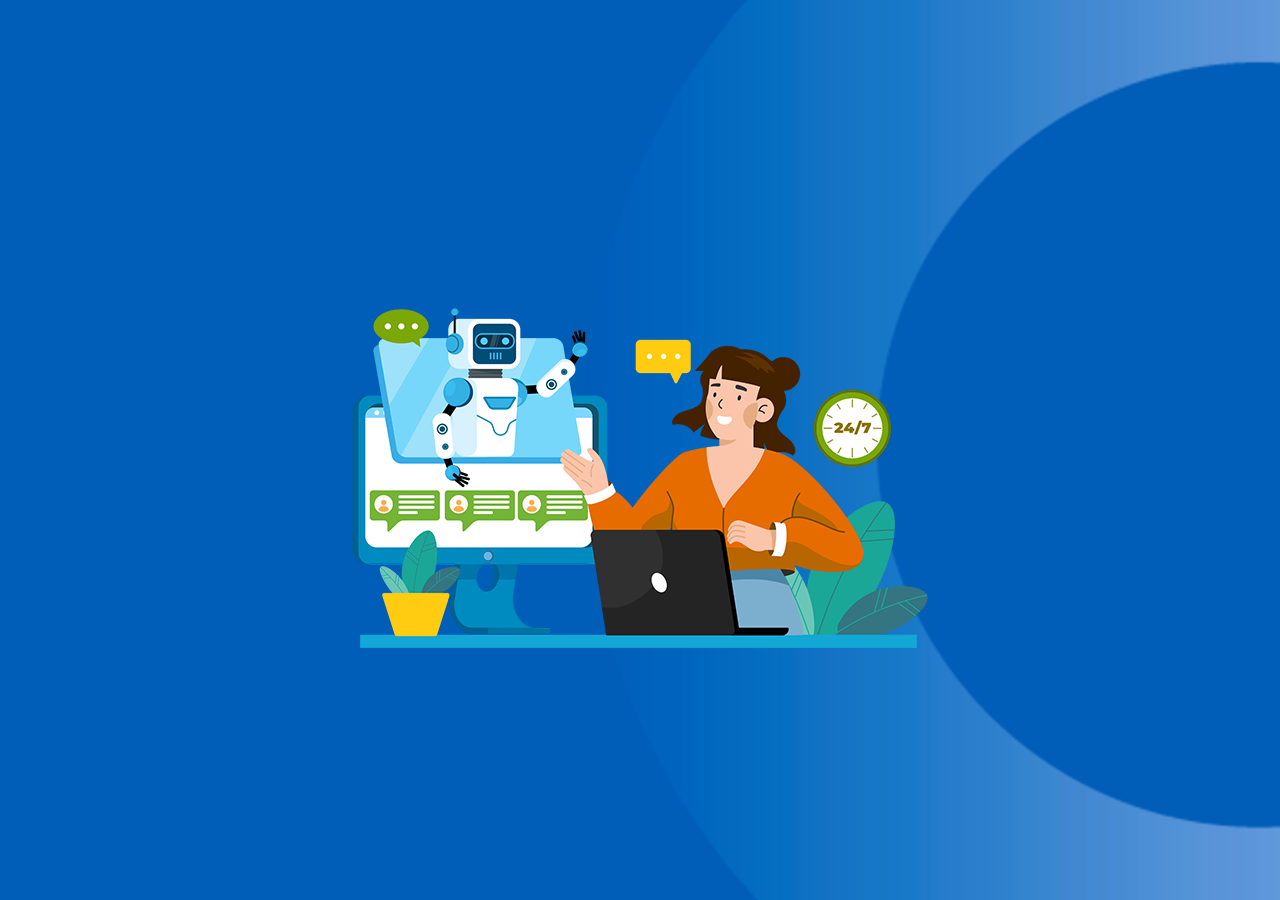
Marketing To AI Agents Is The Future: Is Your HVAC Business Ready?
Picture this: a homeowner is standing in their kitchen, noticing the AC isn’t cooling like it used to. Instead of reaching for their phone to Google “HVAC repair near me,” they simply say, “Hey Alexa, find me the best HVAC repair company in my area.” Within seconds, the smart assistant delivers a few options—and boom, just like that, a decision is made.
This isn’t the future. This is happening right now.
As an HVAC business owner, you’ve probably mastered the traditional marketing game—SEO, Google Ads, social media, maybe even some direct mail. But there’s a new player at the decision-making table, and it’s not human. Artificial Intelligence (AI) agents—like Alexa, Siri, Google Assistant, and even ChatGPT—are shaping the way customers find and interact with service providers. If your business isn’t showing up in those AI-driven results, you’re already falling behind.
Let’s break it all down and talk about what this means for your business, and how you can stay ahead of the curve.
What Exactly Are AI Agents?
AI agents are digital assistants powered by artificial intelligence that interact with users through voice or chat. These include popular platforms like:
- Amazon Alexa
- Apple’s Siri
- Google Assistant
- Microsoft Cortana
- Chat-based tools like ChatGPT and Google Gemini
They help users perform a variety of tasks—setting reminders, answering questions, making calls, and yes, finding service providers like HVAC companies.
But here’s what’s critical to understand: AI agents don’t just display a list of options like a search engine. They choose for the user based on what they interpret to be the “best match.” That means your marketing strategy now has to consider what machines think is relevant—not just what humans see.
Why This Shift Matters for HVAC Businesses
According to Gartner, by 2025, 80% of customer service interactions will be handled by AI. That includes booking appointments, asking about services, and requesting quotes. Additionally, a study by Statista found that more than 55% of U.S. households had at least one smart speaker as of 2023—and that number is growing fast.
That means more and more consumers are turning to voice-activated AI to find HVAC help, especially in urgent situations like a broken AC in July.
This changes the game in several key ways:
- Speed matters: AI wants quick, clear answers.
- Trust is algorithmic: AI agents rely on data, reviews, and structured content to determine who’s trustworthy.
- Visibility depends on structure: Your website and online presence need to be optimized not just for people—but for machines.
If your business isn’t preparing for these shifts, you risk becoming invisible in the moments that matter most.
How AI Agents Choose HVAC Providers
So, what are these digital assistants actually looking for when they choose who to recommend?
Here are some of the core criteria:
1. Structured Data and Schema Markup
AI agents read websites differently than people. They don’t skim headlines or look at your logo. Instead, they rely on something called structured data—a type of code that helps them understand key details like your business hours, service areas, reviews, and pricing.
If your website doesn’t include proper schema markup (like LocalBusiness or HVACBusiness schema), AI agents may skip over you entirely—even if your site looks beautiful to human visitors.
2. Online Reviews and Reputation
Voice assistants often rely heavily on review aggregators like Google, Yelp, and even Facebook to determine which HVAC businesses are “trusted.” In fact, 91% of consumers read online reviews before making a purchasing decision (BrightLocal, 2023). AI is scanning those same reviews—and if you don’t have recent, positive ones, you’ll be passed over.
3. NAP Consistency (Name, Address, Phone)
Inconsistent listings across different platforms can confuse AI. If your Google Business Profile says one phone number but your Facebook page has another, or if your address is spelled differently on Yelp, the AI may not trust your info—and drop you from the results.
4. Mobile and Voice Search Optimization
AI agents prioritize mobile-friendly sites with fast load times and concise content. They also need your site to be optimized for natural language searches—because that’s how people talk to their devices.
Instead of typing “HVAC repair Tampa,” they’re saying, “Who fixes air conditioning near me?” Your site should answer questions in that same language.
Practical Steps to Make Your HVAC Business AI-Ready
You don’t need to be a tech expert to stay ahead of this trend—you just need a smart marketing partner (and we know one). But here’s a breakdown of what you can start doing:
1. Upgrade Your Website With Structured Data
Make sure your website uses schema markup specifically designed for local businesses and HVAC companies. This helps AI understand who you are, what you do, and when you’re open.
2. Optimize for Voice Search
Update your site content to reflect how people speak. Use conversational language, answer common customer questions, and create FAQ pages with clear answers.
3. Get More (And Better) Online Reviews
Encourage happy customers to leave reviews on platforms like Google, Yelp, and Nextdoor. Make it part of your follow-up process after every service call.
4. Keep Business Listings Consistent
Audit your online presence. Make sure your name, address, and phone number (NAP) are identical across every platform. This helps AI trust your business and recommend it.
5. Focus on Local SEO
AI agents prioritize proximity when making recommendations. Ensure your Google Business Profile is complete, accurate, and regularly updated with photos, services, and posts.
6. Improve Mobile Experience
Most AI requests come from mobile devices. Make sure your website loads fast, looks great on phones, and offers a simple way to contact you or request service.
How Optic Marketing Group Can Help
At Optic Marketing Group, we know this shift toward AI-driven decision-making isn’t just a trend—it’s the new standard. And we’re here to help HVAC business owners like you not only keep up, but get ahead.
We pour our heart and soul into everything we do, and we take the time to truly listen to your goals and vision. By working together, we’ll develop a custom strategy that gets your business in front of both people and the AI agents that are increasingly making decisions for them.
Here’s what we can do for you:
- Build or upgrade your website with the right structured data and voice-optimized content.
- Audit and manage your online listings to ensure consistency and accuracy.
- Generate more high-quality reviews through automated tools and reputation management.
- Run targeted local PPC and SEO campaigns that align with AI’s ranking factors.
- Provide cross-channel marketing strategies that work together seamlessly—web, SEO, social, and beyond.
And we don’t do smoke and mirrors. What makes us different from every other agency? We actually listen. We take the time to understand your unique business goals and build strategies that work for you—not some one-size-fits-all formula.
The Future Is Here—Don’t Let AI Pass You By
Whether you’re running a small HVAC team or managing a fleet of technicians, the way your customers find you is evolving. If you’re not already marketing to AI agents, you’re missing out on opportunities every single day.
But you don’t have to figure it all out alone.
All we ask is you to trust us 1%…we will earn the other 99%.
Let Optic Marketing Group be your guide into the future of HVAC marketing. Contact us today, and let’s make sure your business stays ahead of the curve—because the companies that adapt early are the ones that win.
Ready to be found by the AI agents of today (and tomorrow)? Reach out now and let’s build your future—together.

Search Max AI Ads Explained: How AI Is Revolutionizing Google Ads
If you’re a small business owner in the home services industry—like HVAC, plumbing, or electrical—you’ve likely felt the pressure of keeping up with digital marketing. Google Ads has long been a powerhouse for lead generation, but lately, there’s a buzzword shaking things up: Search Max AI Ads.
So what’s all the hype about? Is it just another tech trend or a real game-changer? The short answer: it’s changing everything.
Artificial Intelligence (AI) is making Google Ads smarter, faster, and more results-driven. For business owners with little time to spare, that’s a big deal. Whether you’re managing your own campaigns or working with a marketing partner like Optic Marketing Group, understanding how AI is transforming the ad game can help you stay ahead of the competition and bring in more quality leads—without spending more time or money.
What Are Search Max AI Ads?
Google’s Search Max AI Ads are part of a broader shift toward automation and machine learning in digital advertising. At their core, these ads are AI-powered campaigns that use Google’s algorithms to make real-time decisions on ad copy, targeting, bidding, and placement.
Instead of manually managing keywords and budgets every day, Search Max AI Ads do the heavy lifting—analyzing thousands of signals (like search intent, device type, location, and time of day) to deliver your ad to the right person at the right moment.
Think of it as a smart assistant that learns as it goes, constantly improving ad performance based on what’s working best.
How Does AI Actually Work in These Ads?
Here’s how AI plays a role across every layer of your Google Ads campaign:
1. Dynamic Ad Creation
With Search Max AI Ads, Google generates multiple variations of headlines and descriptions. Based on real-time data, it automatically tests and serves the best-performing combinations to users. This takes the guesswork out of crafting the “perfect” ad and boosts engagement.
2. Automated Bidding
AI dynamically adjusts your bids based on conversion likelihood. If Google’s system determines a user is likely to book a service call or request an estimate, it will increase your bid for that search—maximizing your chances of winning the click without overspending on low-value searches.
3. Real-Time Audience Targeting
Forget static demographics. AI tracks behavioral signals, such as search history, device usage, and location, to zero in on people actively looking for your services. It knows when someone needs a plumber at 10 PM—and serves your ad accordingly.
4. Search Term Expansion
Instead of relying on a list of exact-match keywords, Search Max AI Ads cast a wider net. Google uses AI to match ads with search terms that are semantically relevant, even if they don’t exactly match your chosen keywords. This expands reach without sacrificing relevance.
Why It Matters for Home Services Businesses
If you’re in the HVAC, plumbing, or electrical space, you probably don’t have hours to spend managing ad campaigns. That’s where AI delivers real value.
1. More Qualified Leads, Less Wasted Spend
AI targets users who are more likely to convert—like homeowners in your service area searching for emergency repairs or seasonal maintenance. This precision cuts down on wasted ad dollars.
According to Google, advertisers using AI-powered campaigns saw a 20% increase in conversions at the same cost per action (CPA).
2. Better Performance with Less Management
AI removes the day-to-day micromanagement. For busy business owners or stretched-thin teams, that’s a huge relief. You don’t need to babysit your campaign to see better results.
3. Faster Insights, Faster Results
Because AI constantly tests and learns from user behavior, it optimizes your campaigns faster than a human ever could. That means quicker feedback on what’s working—and faster adjustments that improve ROI.
Debunking the Common Myths
Even though AI has clear advantages, many small business owners are hesitant. Let’s clear up a few misconceptions:
Myth 1: “AI means I’ll lose control of my campaigns.”
AI actually helps you make smarter decisions—not less. You still set your goals, budget, and audience preferences. AI just fine-tunes the details to get better results.
Myth 2: “I don’t need a marketing agency anymore if AI is doing everything.”
While AI handles automation, you still need strategy, creative direction, landing page optimization, and conversion tracking. That’s where a skilled marketing partner like Optic Marketing Group makes the difference.
Myth 3: “AI is too new—I don’t want to risk it.”
AI isn’t new—it’s been part of Google Ads for years. What’s new is how powerful and accessible it’s become, especially for small businesses.
The Challenges (and How We Solve Them)
No system is perfect, and AI campaigns aren’t totally hands-off. Here’s where things can get tricky:
1. Lack of Custom Strategy
AI doesn’t know your business the way you do. It optimizes for general results—not necessarily for seasonal trends or local competitors. Optic Marketing Group works with you to guide strategy, adjust messaging, and align your campaigns with your business goals.
2. Misaligned Conversions
AI learns based on your conversion data. If your tracking isn’t set up right, you could be optimizing for phone calls that never get answered. We make sure your conversion tracking is accurate and focused on real results—like booked appointments and revenue.
3. Poor Landing Pages
Even the best AI can’t fix a bad website. If users click your ad but don’t convert, it hurts your ROI. We ensure your landing pages are optimized for performance, speed, mobile use, and SEO.
What’s Next? How AI Will Keep Evolving in Google Ads
We’re only seeing the beginning of AI’s impact on paid search. Expect to see even more powerful capabilities soon:
- Predictive Audiences: AI will anticipate who is likely to need your services next based on behavior patterns.
- Conversational Ads: Integration with AI chatbots and voice search will create new ways to engage users directly from ads.
- End-to-End Automation: AI will soon be able to suggest landing page updates, automatically pause underperforming campaigns, and make budget recommendations in real time.
For business owners, this means even more opportunity to reach new customers, but also more complexity. That’s why having an expert in your corner matters more than ever.
Why Work with Optic Marketing Group?
At Optic Marketing Group, we don’t just plug in AI and hope for the best. We combine human strategy with smart technology to deliver real results.
Here’s what makes us different:
- We actually listen to your goals and vision.
- We custom-build strategies tailored to your business—no cookie-cutter templates here.
- We manage every step of your campaign, from creative and targeting to optimization and reporting.
- We focus on ROI and transparency—no smoke and mirrors.
And most importantly, we specialize in helping home service businesses grow. From HVAC companies to plumbing contractors, we know your industry, your customers, and your challenges. We’re here to help you go from good to great.
Ready to Level Up with AI? Contact Optic Marketing Group
Search Max AI Ads are no longer just a buzzword—they’re the future of digital advertising. And that future is already here. If you want to stay competitive, drive more qualified leads, and get better results without burning out or blowing your budget, AI is your next best move.
But you don’t have to go it alone.
Let Optic Marketing Group help you harness the power of AI the right way. With our full-service approach and deep understanding of the home services industry, we’ll build a Google Ads strategy that’s as smart as the tech behind it.
All we ask is you to trust us 1%…we will earn the other 99%.
Contact us today and let’s turn clicks into customers, together.
Google's AI Mode vs. AI Overviews: How To Adapt To The New Search Algorithm
Imagine searching for “how to fix a leaking pipe” and, instead of scrolling through a list of links, you’re given a fully written answer right at the top of Google’s results page. Sound familiar? That’s because Google has officially shifted the way we interact with search, launching features like AI Overviews and testing new functionality like AI Mode, and small businesses, especially in home services like HVAC and plumbing, need to pay close attention.
The old days of ranking through simple keyword stuffing and link-building tricks are long gone. Google’s AI-first search experience is designed to mimic natural language interaction, offering users synthesized, conversational responses. But what does that mean for your business?
At Optic Marketing Group, we’re here to walk you through what’s changing, what it means for you, and—most importantly—how you can adapt and thrive in the new era of AI-powered search.
What Is Google’s AI Mode?
Google’s AI Mode is an experimental interface that represents a deeper move toward conversational search. It allows users to toggle into a more AI-driven search experience where the search engine engages in a “conversation” to help refine queries and deliver personalized results.
Key Features of AI Mode:
- Personalized query refinement
- Multistep reasoning for complex questions
- Persistent conversational memory (in some cases)
- Integration with Google’s Gemini AI for tasks like summarizing or planning
This shift means users may spend more time interacting with Google’s AI rather than clicking on traditional organic links, which may reduce the visibility of standard search results even further.
What Are Google’s AI Overviews?
Formerly known as the Search Generative Experience (SGE), AI Overviews are already being rolled out across the U.S. and other markets. They appear at the top of many search results and offer quick, AI-generated summaries based on web content.
For example, instead of showing multiple listings for “best AC units for small apartments,” Google might now display a synthesized answer outlining the top choices with brief explanations, pulling from various websites without necessarily crediting them as prominently as before.
Key Features of AI Overviews:
- Quick answer summaries at the top of SERPs (search engine results pages)
- Fewer clicks required for users
- Often reduces the visibility of organic and paid listings
- Heavily optimized for mobile users
What This Means for Small Business Owners
If you’re in HVAC, plumbing, or another home service industry, you’ve probably worked hard to get your website ranking well on Google. But now, even the #1 organic listing could be pushed below an AI Overview. In some cases, it may not be seen at all unless a user scrolls down.
Here’s how it impacts you:
- Less Real Estate for Organic Listings: The top of the page is now often occupied by AI content, pushing your business further down.
- Reduced Click-Through Rates: AI answers mean users may not need to visit your website to get the info they want.
- More Emphasis on Contextual Relevance: Google’s AI pulls from pages that are contextually rich and semantically accurate, not just keyword-optimized.
This can be frustrating, but it also opens the door to new optimization strategies that help your content become the source for AI answers, putting your business back in the spotlight.
Adapting to AI-Powered Search: Actionable Steps
1. Focus on First-Hand Experience and Expertise (E-E-A-T)
Google’s AI Overviews lean heavily on content that demonstrates Experience, Expertise, Authoritativeness, and Trustworthiness (E-E-A-T). For home services businesses, this means your site should:
- Include author bios that prove your credentials (e.g., “20+ years in HVAC repair”)
- Share real photos, videos, and case studies
- Offer genuine, hands-on tips that show you know your trade inside and out
2. Optimize for Conversational Queries
AI Overviews aim to answer full questions, not just keywords. This means your content should reflect how people naturally talk and ask questions.
Instead of writing: “Best HVAC systems 2025”
Write: “What are the best HVAC systems for homeowners in 2025?”
Build out FAQ pages, blog posts, and service pages that clearly answer common questions from your customers. Think: “How long does it take to install a tankless water heater?” or “What’s the best time of year for AC maintenance?”
3. Make Use of Structured Data Markup
Structured data (aka schema) helps Google understand your content better. For service providers, this could include:
- Review markup
- Local business schema
- Service-specific schema
This won’t guarantee inclusion in AI Overviews, but it boosts your visibility in other areas like featured snippets, map packs, and image results—all of which still play a big role.
4. Keep Content Fresh and Accurate
Google’s AI models prioritize fresh, relevant information. If your last blog post was two years ago, now’s the time to refresh your content calendar. A 2024 study by BrightEdge found that websites that updated old content monthly saw a 26% lift in visibility in AI-influenced search.
Make sure your service pages are current, pricing is accurate, and blogs are posted regularly with up-to-date data.
5. Local SEO Is Still King
While AI is changing many parts of search, local results remain a stronghold for home service businesses.
- Keep your Google Business Profile updated
- Collect genuine, detailed reviews
- Use local-specific keywords in your content
- Optimize for “near me” and city-specific queries
AI may dominate informational searches, but when users need a “plumber in Tampa, FL,” Google still prioritizes local intent.
6. Create Multimedia Content
AI Overviews often reference multiple content formats—text, images, and videos. Businesses that offer helpful video content, such as “How to relight a pilot light,” stand a better chance of being cited in AI answers.
Consider creating:
- Short how-to videos
- Walkthroughs of common service calls
- Explainer clips on seasonal maintenance
Multimedia-rich content boosts dwell time and engagement—two factors AI may use in evaluating content quality.
How Google’s AI Impacts Paid Search
Let’s not forget the other side of the search coin—Google Ads.
AI Overviews currently appear above both paid and organic listings, which means:
- Your ads may get less visibility
- Cost-per-click (CPC) may increase as competition tightens
- Quality Score will be more important than ever
To adapt:
- Make your ad copy hyper-relevant to user intent
- Leverage Performance Max campaigns that use AI to find the right audience
- Use callout extensions and sitelinks to offer more value
Optic Marketing Group can help you restructure your campaigns to navigate this new landscape while maximizing ROI.
Will Traditional SEO Still Matter?
Absolutely—but SEO is evolving.
Old-school SEO tactics (like exact match keywords or thin content pages) are losing power. The new SEO is about depth, context, and user satisfaction.
Content that helps, informs, and resonates with human readers—not just search bots—is more likely to be surfaced by AI-powered search.
That’s where we come in.
Partner With Optic Marketing Group to Stay Ahead
At Optic Marketing Group, we understand that AI in search isn’t a threat—it’s an opportunity.
We specialize in crafting smart, adaptive marketing strategies for home service businesses like HVAC, plumbing, and electrical contractors. Our cross-channel marketing approach ensures you’re covered from organic SEO to Google Ads, and everything in between.
Our team can help you:
- Create high-quality, expert-driven content designed for AI discovery
- Optimize your website for conversational and local queries
- Refresh your site architecture for better crawlability and user flow
- Build video and multimedia assets that appeal to modern search engines
- Launch ad campaigns that stay visible even as search real estate changes
Adapt Today, Win Tomorrow With Optic Marketing Group
Google’s AI Mode and AI Overviews mark a major shift in how people search—and how businesses get found. But with the right strategy, these changes don’t have to feel overwhelming.
By prioritizing quality content, local authority, and adaptive SEO, your business can not only survive but thrive in this AI-powered search environment.
Let Optic Marketing Group be your guide. All we ask is you to trust us 1%…we will earn the other 99%.
Ready to adapt your marketing for the future of search? Contact us today to schedule a consultation and see how we can take your business from good to great.

GEO vs. SEO: Navigating the Future of Online Search
Imagine this: You’re a local HVAC or plumbing business owner. You’ve spent years investing in your website, blogging regularly, optimizing keywords, and making sure your Google My Business profile is on point. You finally made it—you’re ranking on page one of Google. But now, something’s changing. Fewer people are clicking on those organic links. Are you noticing a shift in your organic traffic? Enter GEO—Generative Engine Optimization. It’s not just a buzzword. It could be the future of how people find businesses like yours.
In today’s digital world, search engines aren’t the only game in town anymore. Tools like ChatGPT, Bing Copilot, and Google’s AI Overview are transforming how users ask questions and get answers. Instead of browsing through ten blue links on Google, people are getting one tailored, conversational response—powered by AI.
And that changes everything.
Let’s dive into how GEO is shaking up the world of traditional SEO, what it means for your business, and how you can stay ahead of the curve with help from experts like Optic Marketing Group.
What Is GEO, and Why Should Home Service Businesses Care?
GEO stands for Generative Engine Optimization, and it’s the process of optimizing content for AI-driven tools like chatbots, virtual assistants, and generative search engines that pull answers from across the internet to deliver a synthesized, conversational result.
Instead of ranking for a list of keywords in hopes that a user clicks on your website, GEO is about getting your brand’s information included in the AI’s answer. That’s a major shift in strategy—especially for small businesses that rely on search traffic to drive leads.
Here’s why this matters:
- By 2024, more than 50% of U.S. adults used voice search daily, according to Statista.
- OpenAI’s ChatGPT has surpassed 180 million users globally.
- Google’s AI Overview is rolling out to millions of users, where traditional search results are replaced with AI-generated summaries at the top of the page.
That means the way people find your HVAC or plumbing business online is rapidly evolving.
Traditional SEO: Still Relevant, But Cannot Be Only Tactic
Let’s be clear: SEO is not dead—not by a long shot. Traditional SEO practices like on-page optimization, mobile responsiveness, and backlink building still matter. But the game is changing. In the traditional model, search engines would crawl websites, rank them based on authority and relevance, and display them in search results. Success was measured in clicks.
Now, clicks are declining.
Google’s own research has shown that zero-click searches—where the user gets their answer without clicking a single result—account for more than 60% of mobile queries. With AI-generated answers becoming more prevalent, that number will likely grow.
So even if your site ranks #1, users might never reach your website if an AI tool answers their question before they get the chance to click.
That’s why GEO is getting so much attention.
How GEO Works: A Simplified Breakdown
GEO is all about content visibility in AI-generated responses. While SEO optimizes content for search engines, GEO optimizes content for AI systems trained to provide the most relevant, accurate, and well-structured answers.
Here are the key components:
1. Structured, Informational Content
AI models love clean, factual, well-organized content. Lists, FAQs, and clear headers make it easier for AI to pull relevant bits from your content and serve them up as answers.
2. Conversational Language
Since tools like ChatGPT are built to converse with users, your content should sound human, too. Overly technical or robotic language doesn’t work as well in a GEO-driven world.
3. Entity-Based Optimization
GEO focuses less on keywords and more on entities—like your business name, services, location, and reputation. AI tools seek to understand who you are, what you do, and why you’re trustworthy.
4. Authority and Credibility
Just like traditional SEO, GEO requires establishing yourself as an authority. This means maintaining a strong online presence, getting mentioned on reputable sites, and collecting reviews and testimonials.
Why This Matters to HVAC and Plumbing Contractors
You’re not selling sneakers or tech gadgets. You’re selling trust.
When someone’s AC breaks in the middle of summer, they don’t have time to read five blog posts and compare three websites. They want the best local option, fast. AI-driven tools are learning to deliver that answer.
So if you’re not appearing in chatbot results or generative search answers, you’re missing out on high-intent leads.
In fact, a BrightLocal study in 2023 found that 76% of consumers trust AI-generated business recommendations—and that number is rising. If an AI tool suggests your competitor over you, the lead could be gone before they ever see your beautifully optimized website.
How to Optimize for GEO: Practical Steps You Can Take Now
Here’s the good news: If you’ve invested in SEO, you’re not starting from scratch. Many best practices still apply. But a few changes will help you prepare for the AI-powered search future.
1. Update Your Website with Conversational Content
Instead of just “AC repair in Tampa,” think: “What should I do if my air conditioner stops blowing cold air?” Write blog posts, FAQs, and service pages that answer real customer questions in a natural tone.
2. Add a Strong FAQ Section
AI models love FAQs. A well-written FAQ page can serve as a goldmine of content that’s easy to parse and surface in chatbot responses.
3. Claim and Optimize All Online Listings
Make sure your business info is consistent across platforms. Google, Yelp, BBB, NextDoor, and industry-specific directories should all be accurate and up to date. GEO-friendly AI tools rely heavily on structured data from these platforms.
4. Use Schema Markup
Structured data helps AI understand what’s on your website. Adding schema markup for local business information, reviews, and service areas gives generative engines better context.
5. Publish Authoritative Content Regularly
Be the expert in your space. Share how-tos, maintenance tips, and troubleshooting guides. The more helpful content you produce, the more likely AI tools will pull your business into the conversation.
6. Monitor and Adapt
GEO is still evolving. Keep an eye on how people are discovering your site and where your traffic is coming from. Tools like Google Search Console, Bing Webmaster Tools, and AI-specific analytics will become essential.
GEO vs. SEO: Can They Coexist?
Absolutely. In fact, they must.
SEO is still the foundation—your website, backlinks, mobile optimization, and local SEO all contribute to your overall online authority. But GEO is the new layer on top. Think of it as the evolution of SEO, not the replacement.
The key difference? SEO drives clicks. GEO drives visibility within AI answers.
As chatbots become the norm for getting fast, trusted recommendations, visibility in those AI-generated responses becomes just as important as a top Google ranking.
Why Optic Marketing Group Is Your Partner in the New Age of Search
Here’s where we come in.
At Optic Marketing Group, we don’t just keep up with the latest trends—we anticipate them. We’re a full-service marketing agency based in Tampa, Florida, and The Woodlands, Texas, proudly serving HVAC, plumbing, and home service professionals nationwide. From traditional SEO to the latest in GEO strategy, we craft tailored, cross-channel campaigns that work for your business—not just the algorithm.
Our difference? No smoke and mirrors. We actually listen to your goals, your vision, and your challenges. We take that insight and build a real plan of action—designed to take your business from good to great.
Whether you’re just getting started with online marketing or you’re ready to pivot toward AI-powered visibility, our team of web developers, SEO experts, content creators, and media buyers have your back.
Embrace the Future Without Fear With Optic Marketing Group
Change can be intimidating—especially when it comes fast and disrupts what we’ve come to rely on. But here’s the truth: The rise of AI and GEO isn’t something to fear. It’s an opportunity.
It’s a chance to be first in your market to adapt. It’s a chance to own your space in AI-driven results. And it’s a chance to connect with customers in newer, smarter, and more efficient ways.
Let’s do it together.
All we ask is you trust us with 1%… we’ll earn the other 99%.
Contact Optic Marketing Group today to learn how we can position your HVAC or plumbing business for success in the era of GEO and beyond.